
A rough idle, that shaky, uneven feeling when your car is stopped but running, can come from a surprising number of places.
Rough idle causes tend to overlap with each other. Guessing at a fix often means paying for car engine repair that was never actually needed. Here’s a breakdown of the most likely culprits, from quickest to rule out to the ones that need a deeper look.
Start With the Basics: Spark Plugs and Ignition
Worn or fouled spark plugs are one of the most common and least expensive causes of a rough idle.
As plugs age, the gap between the electrodes widens or carbon builds up.
That weakens the spark needed to ignite the fuel cleanly.
A weak or failing ignition coil can cause the same symptom. Both tend to show up as:
- A slight shake or pulsing feeling at idle
- A check engine light showing a specific cylinder misfire code

Vacuum Leaks
Your engine needs a precisely measured amount of air mixing with fuel to run smoothly.
A vacuum leak lets unmetered air in and throws that balance off. Common leak points include:
- Cracked vacuum hoses
- A worn intake manifold gasket
- A loose connection at the throttle body
A vacuum leak has a few telltale signs:
- A higher than normal idle speed
- Sometimes a faint hissing sound
- Roughness that improves right after a cold start but worsens as the engine warms up
That last pattern is a strong clue, since vacuum leaks tend to get worse as the engine reaches temperature.
Carbon Buildup in the Intake and Combustion Chamber
Over time, carbon deposits can build up on intake valves and inside the combustion chamber, disrupting airflow and combustion.
A Subaru service bulletin addressing rough idle and related misfire concerns describes carbon buildup on fuel injectors and internal components as a direct contributor to:
- Rough idle
- Engine misfire codes
- A noticeable lack of power
A couple of everyday factors affect how quickly carbon builds up:
- Fuel quality
- Driving habits
A rough idle isn’t always caused by a single failed part.
A car tune up service that includes an intake and injector inspection can often catch this before it worsens.
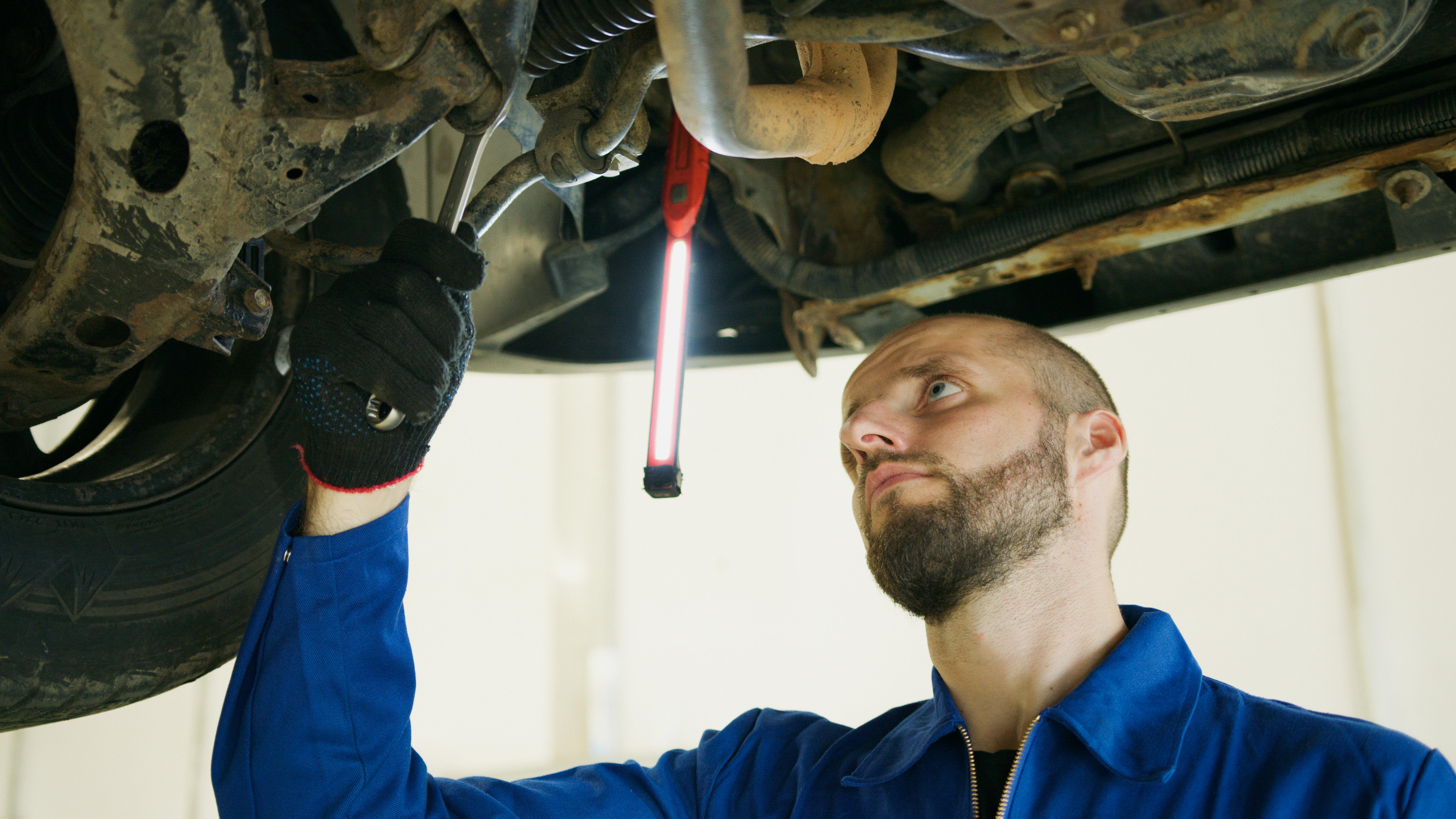
A Faulty Idle Air Control Valve or Dirty Throttle Body
On older vehicles, a separate idle air control valve manages how much air bypasses the throttle plate.
That keeps the idle at the correct speed.
When it sticks or gets dirty:
- The idle can hunt up and down
- It can drop low enough to stall, especially right after coming to a stop
Newer vehicles with electronic throttle control don’t have a separate valve.
But similar symptoms can come from:
- A dirty throttle body
- A failing throttle position sensor
This is generally an affordable fix, whether that’s cleaning the parts or replacing the valve itself.
Fuel System Issues
A rough idle at the fuel system level usually traces back to:
- Dirty or clogged fuel injectors delivering fuel unevenly across cylinders
- A failing fuel pump or pressure regulator starving the engine of steady pressure
These often show up alongside:
- Hesitation during acceleration
- A check engine light
That combination helps narrow things down during diagnosis. Left unresolved, fuel delivery problems can lead to more involved engine repair.
Coolant Intrusion and Head Gasket Issues
In less common but more serious cases, a rough idle can signal coolant entering the combustion chamber. This usually happens through a failing head gasket. A Ford technical service bulletin covering a documented issue on certain EcoBoost engines notes this combination of symptoms:
- Rough running condition
- Low coolant levels
- White exhaust smoke
This combination points toward internal engine repair rather than a simple tune-up item.
If it turns out to be the cause, it usually also means addressing the cooling system alongside the engine work.
Why a Rough Idle Shouldn’t Be Ignored
Beyond the annoyance, a persistent rough idle usually means your engine is running an imbalanced air-fuel mixture:
- Too lean, from a vacuum leak
- Misfiring, from a fouled plug
That imbalance increases emissions and can eventually affect exhaust components downstream.
The EPA notes that state emissions testing programs exist to catch vehicles emitting above legal limits. Lean misfire conditions are a common reason vehicles fail. Left unaddressed, a rough idle can also contribute to wear that eventually calls for more involved engine repair.

A Systematic Way to Narrow It Down
Rather than guessing at parts, the most efficient approach rules out causes in order of likelihood and cost:
- Check spark plugs
- Look for obvious vacuum leaks
- Run a scan tool check for stored diagnostic codes
Georgia’s consumer protection guide recommends finding a shop you trust before a problem like this comes up. That way, a proper diagnostic process is already lined up when you need it.
FAQs
1. What’s usually the cheapest cause of a rough idle to fix?
Worn spark plugs. They’re inexpensive and one of the first things checked during a routine inspection.
2. How can I tell if a vacuum leak is causing my rough idle?
Look for a higher than normal idle speed, sometimes with a faint hissing sound. It often gets worse once the engine warms up.
3. Does carbon buildup really cause a rough idle?
Yes. It’s a documented cause of rough idle, misfire codes, and lost power. Engines prone to carbon buildup on intake valves see this most often.
4. Is a rough idle ever a sign of something serious?
Sometimes. Coolant entering the combustion chamber through a failing head gasket can cause it. This usually comes with low coolant and white exhaust smoke.
5. What’s the fastest way to narrow down the cause?
Check spark plugs and obvious vacuum leaks first, then run a scan for stored codes. That order rules out the cheapest causes before moving to anything more involved.
Let’s Get to the Bottom of the Rough Idle
At Vehicle Masters, we run a proper diagnostic process before treating any of the possible rough idle causes as the answer. If your car has developed a shake at idle, reach out to us. Our car maintenance service includes a check of ignition components and stored codes for drivers throughout Oak Forest and the surrounding South Suburbs.