
Thirty years ago, a car’s electrical system managed a relatively short list of functions — lights, ignition, the radio, maybe power windows. Today, a modern vehicle may contain over 100 electronic control units managing everything from fuel injection timing and transmission shift points to lane assist, adaptive cruise control, and automatic emergency braking. Car electrical problems in this environment are fundamentally different from what they were in a previous era — more complex, more interconnected, and more consequential when they go wrong.
For drivers in Oak Forest and across the South Suburbs, understanding how electrical issues develop, what symptoms they produce, and why they require accurate diagnosis rather than parts replacement is increasingly important knowledge. The vehicle that once responded to a wrench now responds to a wiring diagram and a diagnostic interface.
Why Electrical Systems Are So Central to Modern Vehicle Operation
The shift from mechanical to electronic control in vehicles has been dramatic and ongoing. As NHTSA’s report on automotive electronic control systems performance notes, modern vehicles with complex electronic control systems can enter unsafe states due to software errors and unsafe system interactions — not just hardware failures. The implications are significant: an electrical issue in a modern vehicle can affect performance, safety, emissions compliance, and driver assistance features simultaneously.

This interconnection means that a single failing sensor or a corroded connector doesn’t just affect one system. The data that the sensor provides feeds into multiple control units, and each one adjusts its behavior based on that data. A failing throttle position sensor, for example, affects not just throttle response but also transmission shift behavior, traction control input, and cruise control operation — all at once.
The Most Common Car Electrical Problems
Understanding the most frequently occurring electrical faults helps drivers recognize symptoms earlier and communicate more effectively with technicians.
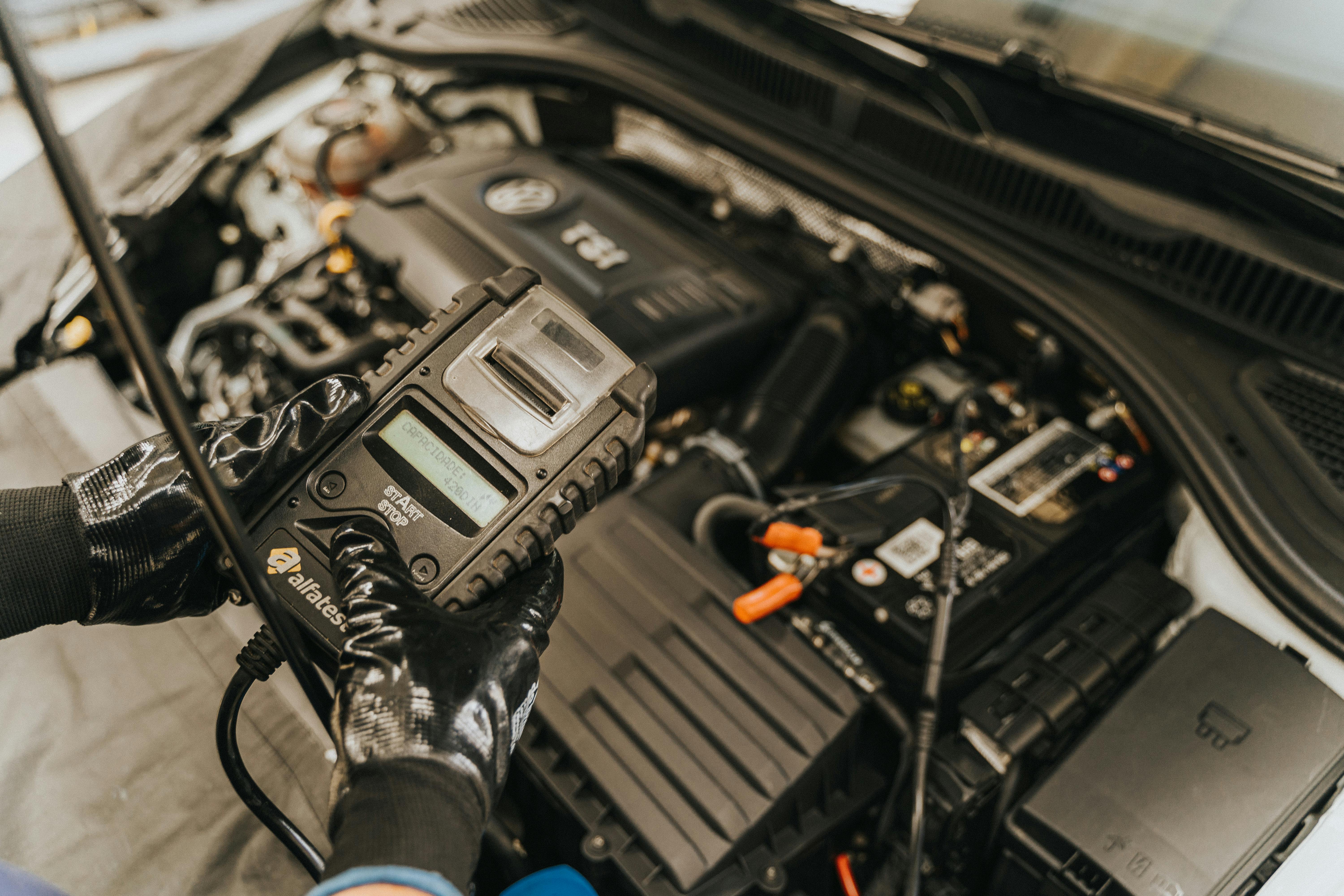
- Dead or weak battery — the most common electrical complaint. A battery that has lost capacity fails to deliver adequate cranking current, particularly in cold weather or after sitting overnight. Load testing — not just voltage testing — accurately identifies a battery that’s approaching failure before it leaves a driver stranded.
- Alternator failure — the alternator charges the battery while the engine runs. A failing alternator causes battery voltage to drop gradually, eventually leading to dimming headlights, electrical accessories behaving erratically, and finally a no-start. Alternator repair serviceaddresses this before the cascade of electrical failures that follow a complete alternator failure.
- Blown fuses and relay failures — fuses protect electrical circuits from overloads. A blown fuse disables a circuit entirely. Relays control high-current circuits using a lower-current signal — when they fail, the circuit they control stops functioning. Multiple blown fuses in a short period often indicate a wiring fault rather than individual component failures.
- Wiring harness issues — corrosion, rodent damage, chafing against metal edges, and heat damage all degrade wiring over time. Damaged wiring produces intermittent faults — symptoms that come and go, appear and disappear, and resist diagnosis from scan tools alone because they only store codes when the fault is active.
- Sensor failures — oxygen sensors, crankshaft position sensors, mass airflow sensors, wheel speed sensors, and throttle position sensors are among the most commonly replaced electrical components. When any of these fail, the control unit it feeds receives incorrect data and adjusts vehicle behavior accordingly — often triggering a check engine or warning light.
- Ground connection failures — ground connections complete every electrical circuit in the vehicle. A corroded or loose ground creates high resistance that manifests as erratic electrical behavior — flickering lights, intermittent accessory failures, unexpected instrument cluster readings, and unexplained fault codes.
How Electrical Problems Affect Safety Systems
The safety implications of car electrical problems in modern vehicles go well beyond inconvenience. NHTSA’s guidance on motor vehicle safety defects specifically identifies wiring and electrical component failures among the categories of safety-related defects that manufacturers are required to report and address. In practice, this means:
- ABS system faults — wheel speed sensors feed the ABS module with the data it needs to prevent wheel lockup during braking. A failing sensor can disable ABS entirely, reverting the vehicle to conventional braking without the driver’s knowledge.
- Stability and traction control — these systems depend on steering angle sensors, wheel speed sensors, and lateral acceleration sensors working in concert. A fault in any one of them can disable stability control, which is particularly significant in wet or icy conditions.
- Airbag system — airbag control modules and their associated sensors are entirely electrical. A fault code in the supplemental restraint system doesn’t just trigger a warning light — it can prevent airbag deployment in a collision.
- Advanced driver assistance systems — camera systems, radar, and ultrasonic sensors that control lane departure warnings, automatic emergency braking, and blind spot monitoring are electrical components. Faults in these systems often go unnoticed until the feature is needed.
- Power steering — modern electric power steering systems are electrically actuated. A fault in the steering module or its sensors can produce sudden heavy steering or erratic assist, which is a significant handling safety concern.
Why Electrical Diagnosis Is Different From Mechanical Diagnosis
One of the most important things a driver can understand about car electrical problems is that they require a fundamentally different diagnostic approach than mechanical issues. A worn brake pad can be measured. A failing water pump can be tested under pressure. But an electrical fault — particularly an intermittent one — requires:
- Complete diagnostic scan — reading both active and stored codes across every module, not just the engine management system
- Live data monitoring — watching sensor outputs in real time to identify values that fall outside their normal operating range under specific conditions
- Wiring diagram interpretation — tracing circuits from the component through its wiring, connectors, and ground points to identify where resistance or continuity has been lost
- Component testing — measuring actual sensor output and component resistance directly, rather than relying solely on what the scan tool reports
The diagnostic service process at Vehicle Masters treats electrical diagnosis with the same rigor applied to mechanical work — scan data alongside physical testing, not one or the other. This approach surfaces the actual cause of electrical faults rather than replacing the most likely component and hoping the symptom disappears.
Signs You May Have an Electrical Problem
Not every electrical fault announces itself with a warning light. These are the symptoms most commonly associated with developing electrical issues:
- Dashboard warning lights — particularly battery, check engine, ABS, traction control, or airbag lights that illuminate and stay on or flicker
- Slow or reluctant starting — particularly in cold weather, pointing toward battery or charging system concerns
- Flickering or dimming lights — headlights or interior lighting that dims at idle or flickers under electrical load often indicates an alternator issue or a failing ground connection
- Electrical accessories behaving erratically — windows, locks, mirrors, or infotainment systems that work intermittently or inconsistently
- Burning smell without smoke — an electrical burning odor, particularly from under the dashboard or near the firewall, suggests overheating wiring and warrants immediate attention
- Blown fuses that repeat — a fuse that blows more than once in the same circuit indicates a fault in that circuit that a replacement fuse won’t fix
FAQ:
Q: Can I drive with a warning light on?
A: It depends on the warning. A battery warning light, ABS light, or airbag light all indicate active electrical faults that affect critical systems — these warrant prompt inspection rather than continued driving. A check engine light that is steady and not accompanied by performance changes is generally not an immediate stop-driving situation, but it should be diagnosed at the earliest opportunity.
Q: Why do electrical problems seem so hard to diagnose?
A: Many electrical faults are intermittent — they only occur under specific conditions of temperature, load, or vibration. When the vehicle arrives at a shop, the fault may not be active, and no code may be stored. Accurate electrical diagnosis requires understanding how circuits work, monitoring live data, and physically testing components and connections — not just reading whatever code happens to be stored at the time of inspection.
Q: Can a bad battery cause multiple warning lights to come on?
A: Yes. Low battery voltage affects every module in the vehicle, and many of those modules log faults when they receive insufficient operating voltage. It’s common for a vehicle with a failing battery to display multiple warning lights — ABS, traction control, power steering, and check engine — that all disappear after a new battery is installed. Battery condition is often the first thing checked during any electrical diagnostic.
Electrical Problems Don’t Fix Themselves — Call Us
If your vehicle is showing signs of car electrical problems — warning lights, erratic behavior, slow starts, or symptoms you can’t explain — give us a call at 708-687-9955. At Vehicle Masters, we diagnose electrical faults accurately using scan data, live readings, and hands-on testing across all major systems. We serve Oak Forest and the South Suburbs with honest, transparent vehicle care — and we never perform work without your approval. Quality service, competitive pricing, customer satisfaction — we’re highly recommended, and we’ll get to the actual cause of the problem.