
A vehicle breakdown rarely comes from nowhere. The flat tire on the expressway, the engine that quit at a red light, the brake failure that turned a routine stop into an emergency — almost every one of these events had warning signs that went undetected or unaddressed. Regular car inspections exist specifically to find those warning signs before they reach the point of failure. Understanding the real vehicle inspection benefits — not just as a list of services but as a genuine protective strategy — changes how drivers think about their maintenance habits.
For everyday drivers in Oak Forest and the South Suburbs, where seasonal road conditions and temperature extremes put additional demands on every vehicle system, proactive inspection isn’t optional. It’s the most reliable tool available for keeping transportation dependable year-round.
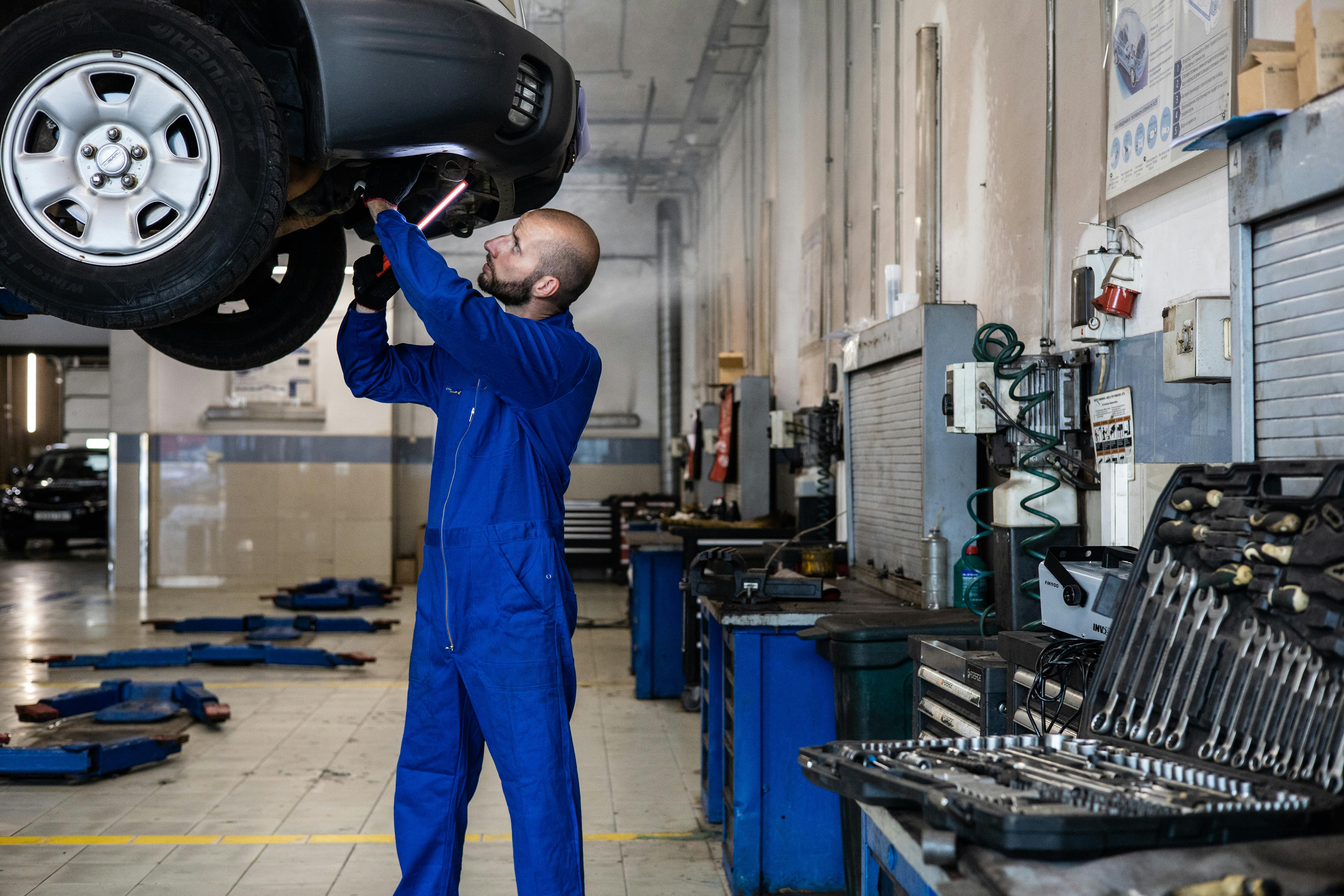
What a Professional Inspection Actually Covers
A thorough inspection is not a quick visual walk-around. It is a systematic evaluation of every major vehicle system — designed to surface both immediate concerns and developing issues that haven’t yet produced visible symptoms.
- Engine and mechanical systems — oil condition, belt and hose integrity, cooling system health, and engine performance indicators are all assessed. A technician performing mechanical diagnosticscan identify issues like a weakening water pump or cracking serpentine belt before they fail entirely.
- Brake system — pad thickness, rotor condition, caliper function, and brake line integrity are measured on all four corners. Auto brake repaircaught at the pad-wear stage is dramatically less expensive than the same repair after rotor damage has occurred.
- Suspension and steering — ball joints, tie rods, shocks, struts, and control arm bushings are checked for play and wear. These components affect handling, tire wear, and braking — all of which deteriorate when suspension issues go unaddressed.
- Tires and alignment — tread depth, pressure, sidewall condition, and wear patterns are evaluated. Uneven wear during an inspection flags an alignment or suspension issue before it costs a full set of tires.
- Battery and charging system — a load test reveals remaining battery capacity far more accurately than a voltage reading, identifying a weakening battery before a no-start event occurs.
- Fluid systems — engine oil, coolant, brake fluid, transmission fluid, and power steering fluid are all checked for level and condition. Degraded fluids don’t always look different — but they stop performing their protective functions long before they’re visually obvious.
- Diagnostic scan — active and stored fault codes across every electronic system are read, surfacing issues that haven’t yet produced warning lights on the dashboard.
The Real Cost of Skipping Inspections
According to AAA’s research on vehicle breakdowns, a professional and thorough vehicle inspection can help reduce the chance of a serious breakdown — and drivers who skip inspections consistently pay more, both in emergency repair costs and in the disruption of an unexpected roadside event. One in three drivers cannot afford an unexpected vehicle repair, yet the inspections that prevent such repairs are often skipped to avoid the cost. The math is straightforward: proactive inspection almost always costs less than reactive repair.
The compounding factor is that deferred issues don’t sit still. A worn brake pad discovered at an inspection requires a pad replacement. The same brake pad ignored for another 10,000 miles destroys the rotor and may damage the caliper, converting a $150 repair into a $600 one. Every deferred maintenance item follows this pattern, and the costs compound across multiple systems simultaneously when inspections are consistently skipped.
How Inspections Protect Safety — Not Just Budgets
The financial argument for regular inspections is compelling. The safety argument is even more so. Vehicles with undetected mechanical issues don’t just cost more to repair — they perform differently in emergencies than vehicles with properly maintained systems.
- Braking performance — a vehicle with worn pads and slightly warped rotors stops in a longer distance than one with fresh components. In an emergency, that distance is the difference between a close call and a collision.
- Steering response — worn ball joints or tie rod ends introduce looseness in the steering that reduces the precision of emergency maneuvers. Drivers who have adapted to gradual changes often don’t notice until a sudden maneuver reveals the deficit.
- Tire traction — tires below minimum tread depth dramatically reduce wet-road grip. An inspection that catches tread depth before it becomes critical prevents a tire from failing at speed or hydroplaning in rain.
- Lighting and visibility systems — headlights, brake lights, and turn signals are often checked during inspections. A brake light that isn’t functioning makes a vehicle invisible to the car behind it in an emergency stop.
The Diagnostic Scan Component: Finding What’s Invisible
One of the most valuable components of a professional inspection is the diagnostic scan. Modern vehicles store fault codes across engine management, transmission, ABS, airbag, and emissions systems — and many of those codes are stored without triggering a visible warning light. A scan that reads both active and stored codes surfaces problems that a driver would have no other way of knowing about.
As AAA’s multi-point inspection guidance explains, a thorough multi-point inspection identifies faulty equipment and possible points of failure before they result in a full-scale breakdown. Components that are developing problems but haven’t yet produced symptoms — a water pump beginning to cavitate, a fuel pump losing pressure capacity, a battery losing cold-cranking amps — show up through systematic inspection before they leave a driver stranded.
How Often Should Inspections Happen?
Twice a year — at minimum — is the practical standard. A spring inspection addresses what winter left behind: brake line corrosion from road salt, suspension stress from freeze-thaw cycles and potholes, and alignment issues from winter road conditions. A fall inspection prepares the vehicle for what winter will demand: battery capacity, tire condition, fluid protection levels, and belt integrity heading into cold weather.
Beyond these seasonal check-ins, a car maintenance service visit — even for routine oil changes — provides an inspection opportunity. A shop that inspects thoroughly on every visit catches the gradual changes that seasonal inspections alone might miss between intervals.
What to Look for in a Trustworthy Inspection
Not every inspection delivers the same value. A reliable inspection involves:
- Thorough underbody access — the vehicle should be on a lift. Brake lines, exhaust, fuel lines, and suspension hardware are not visible from above.
- Written findings — a trustworthy shop documents what was found, organized by urgency, and provides estimates before any work begins.
- Explanation in plain language — findings should be explained clearly, with the issue shown when possible, and no pressure to approve every recommendation immediately.
- No work without authorization — a shop that proceeds without explicit approval is a shop that shouldn’t be trusted with the vehicle at all.
FAQ:
Q: Do I still need an inspection if my car seems to be running fine?
A: Yes. Many developing issues — a weakening battery, a water pump showing early wear, brake pads approaching the minimum — produce no noticeable symptoms until they reach failure. Regular inspections catch these in the window between developing and failing, which is exactly where they’re cheapest to address.
Q: How long does a full inspection take?
A: A thorough multi-point inspection typically takes 30 to 60 minutes when performed as part of a scheduled service visit. Standalone inspections — particularly pre-purchase or seasonal inspections — may take slightly longer depending on the vehicle’s complexity and condition.
Q: Will an inspection always result in recommended repairs?
A: Not necessarily. Many vehicles come through inspections with only monitoring recommendations — items that are within normal range but worth watching. A good inspection is honest about what needs attention now, what can wait, and what looks good. The goal is an accurate picture, not a repair list.
Protect Your Vehicle Before Something Forces the Issue
The vehicle inspection benefits are real, measurable, and compounding — lower repair costs, fewer breakdowns, better safety, and a vehicle that simply lasts longer. If you’re overdue for a professional inspection, give us a call at 708-687-9955. At Vehicle Masters, every vehicle gets a thorough, honest assessment — we tell you what we found, explain what it means, and let you decide what happens next. Serving Oak Forest and the South Suburbs for over 30 years. Quality service, competitive pricing, customer satisfaction — we’re highly recommended.