
You press the gas pedal, but your car stumbles, jerks, or takes a moment to gain speed. If your car hesitates when accelerating, something may be interfering with the engine’s ability to deliver power.
The cause could be worn spark plugs, insufficient fuel delivery, a faulty sensor, or restricted exhaust flow. Because these problems can produce similar symptoms, replacing parts without proper testing can waste money.
At Vehicle Masters in Oak Forest, IL, accurate diagnosis comes before recommending repairs. Here’s what to watch for and how a mechanic can identify the problem.
What Does Acceleration Hesitation Feel Like?
Pay attention to when the problem occurs. Your observations can help narrow down the possible causes.
- Stumbling when pressing the gas:May indicate an ignition, fuel delivery, or sensor problem.
- Jerking or bucking:Can result from engine misfires or inconsistent fuel delivery.
- Slow acceleration from a stop:May indicate reduced engine power or a throttle control issue.
- Hesitation uphill:Engine problems often become more noticeable when the engine works harder.
- Rough idling and hesitation:Can point to vacuum leaks, ignition faults, or airflow problems.
- A check engine light:Indicates that a system may need further diagnosis, but does not identify a failed part by itself.
Notice whether the hesitation occurs when the engine is cold, after warming up, or during harder acceleration.
Common Reasons Your Car Hesitates When Accelerating
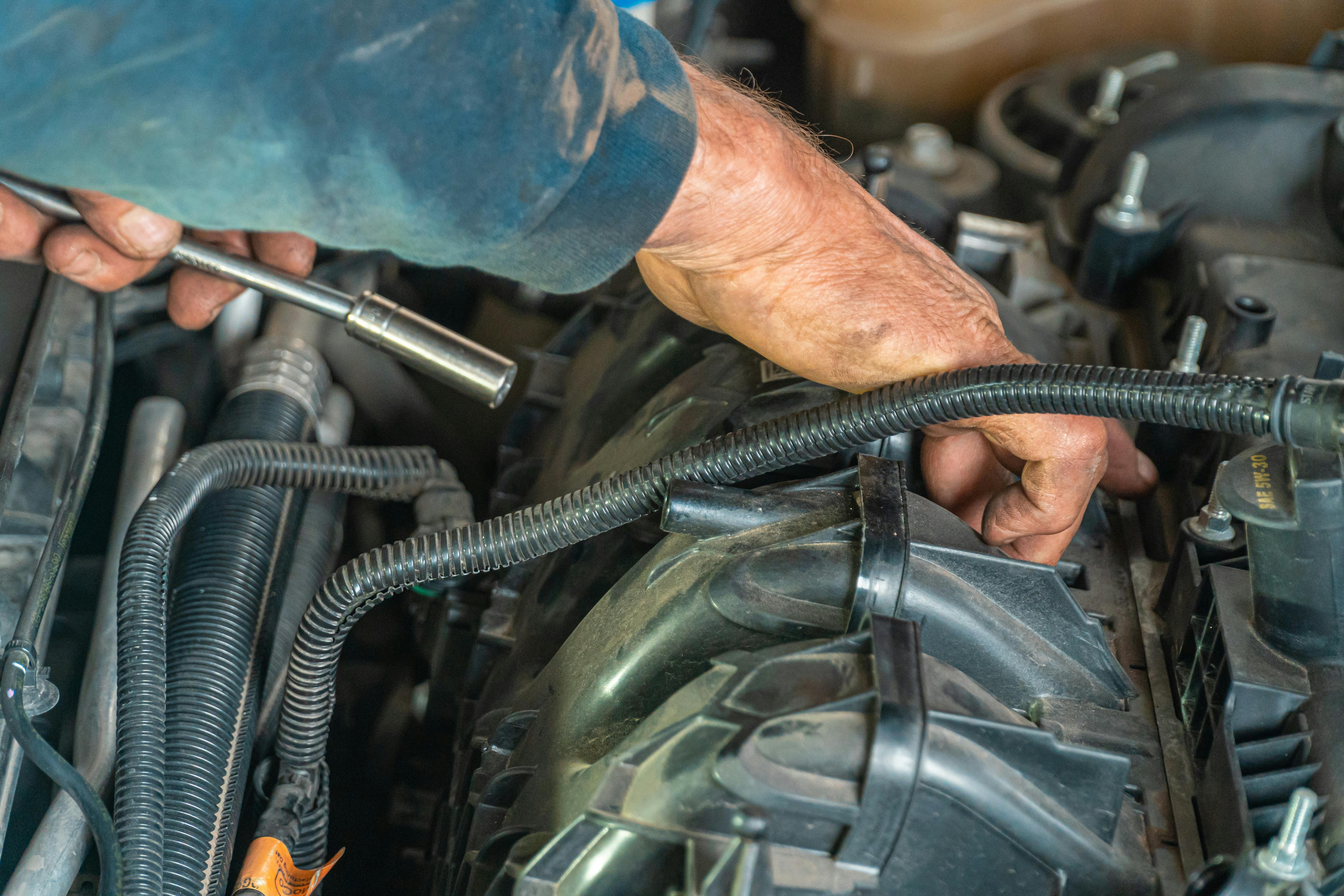
1. Worn Spark Plugs or Ignition Problems
Spark plugs ignite the air-fuel mixture inside the engine’s cylinders. Worn or fouled plugs can cause incomplete combustion, resulting in hesitation and misfires.
Other warning signs include rough idling, engine shaking, and reduced fuel economy. Faulty ignition coils or damaged wiring can cause similar symptoms.
A mechanic can inspect the plugs, check ignition components, and review misfire codes before recommending repairs. An auto tune up service may address overdue maintenance, but recurring hesitation still requires an accurate diagnosis.
2. Weak Fuel Pump or Restricted Fuel Delivery
Your engine needs a steady fuel supply to accelerate properly. If the fuel pump cannot maintain adequate pressure, the engine may struggle when demand increases.
Look for these symptoms:
- Loss of power during acceleration.
- Difficulty climbing hills.
- Trouble starting or occasional stalling.
- Hesitation that becomes more noticeable under load.
A restricted fuel filter, where applicable, or another fuel system fault can produce similar problems.
Fuel pressure testing helps determine whether the pump is delivering enough fuel. If testing confirms a failing pump, a fuel pump repair service may be appropriate. Replacing the pump based on symptoms alone could leave the actual problem unresolved.
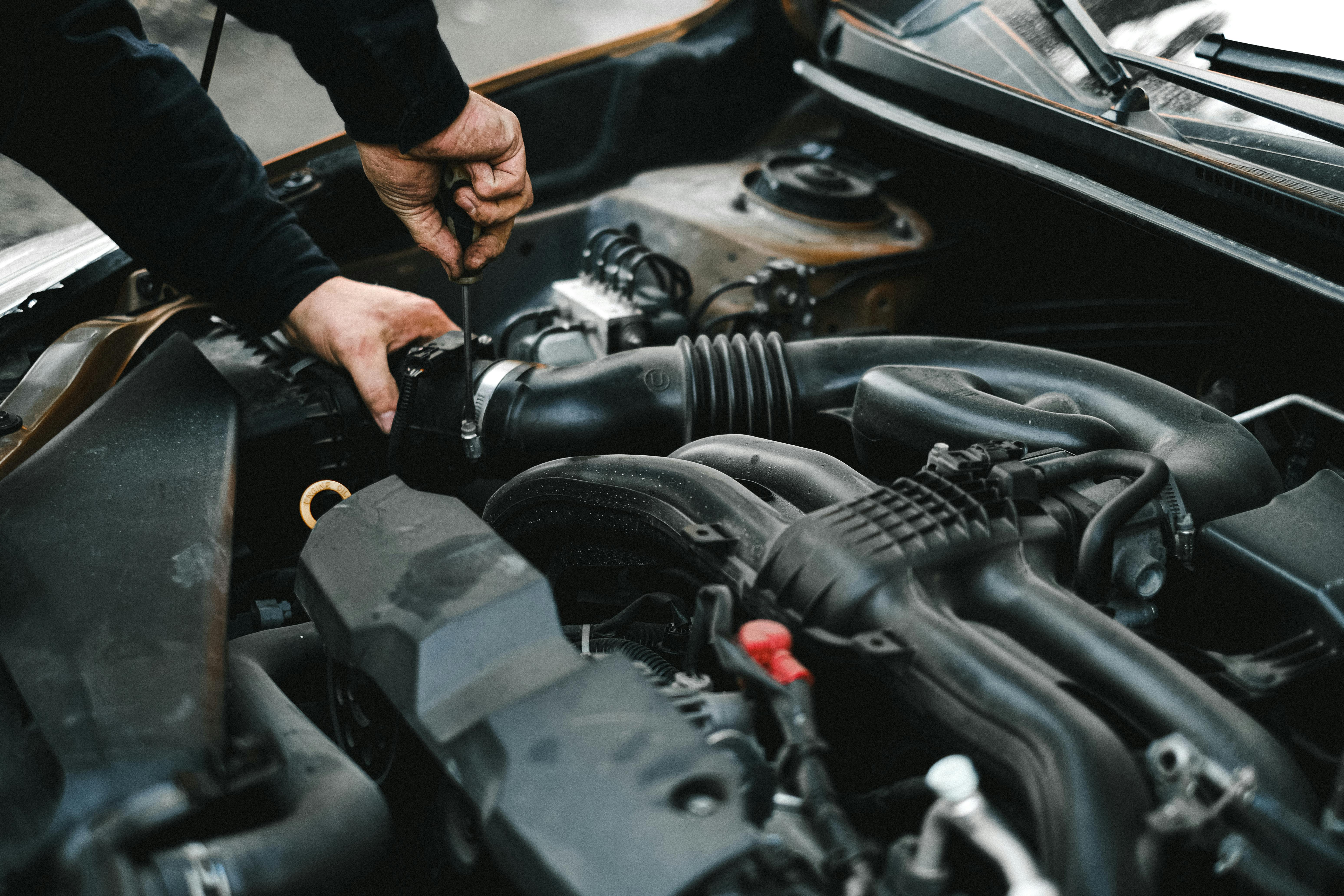
3. Faulty Sensors or Throttle Problems
Modern engines rely on sensor readings to regulate fuel delivery and acceleration.
- Mass airflow sensor:Incorrect readings can disrupt fuel calculations.
- Throttle position sensor:Faulty signals may interfere with engine response.
- Engine coolant temperature sensor:Incorrect temperature information can affect fuel mixture calculations.
- Accelerator pedal position sensor:On electronically controlled systems, faulty signals may interfere with throttle response.
A dirty throttle body, damaged wiring, or an intake air leak can cause similar symptoms.
Diagnostic trouble codes and live sensor readings help identify where further testing is needed. A code does not automatically mean the sensor itself must be replaced.

4. Clogged Catalytic Converter
A restricted catalytic converter can prevent exhaust gases from flowing freely, reducing engine power.
Possible signs include gradual power loss, difficulty maintaining speed under load, and certain check engine warnings. However, these symptoms can also indicate ignition, fuel, or other exhaust problems.
A mechanic may examine fault codes, sensor readings, and exhaust backpressure. If testing confirms a restricted or failed converter, catalytic converter replacement may be necessary. Related emissions repair may also be required if an underlying engine problem contributed to the damage.
5. Vacuum Leaks or Dirty Fuel Injectors
A vacuum leak allows unwanted air into the engine, potentially disrupting the air-fuel mixture. Cracked hoses, leaking intake connections, and damaged ducts are possible sources.
Common clues include rough idling, hissing sounds, and hesitation when accelerating from a stop.
Fuel injectors can also cause trouble if deposits, electrical faults, or internal problems interfere with fuel delivery. A mechanic may inspect intake hoses, evaluate fuel-trim readings, and test injector operation before recommending cleaning or replacement.
Can Other Mechanical Problems Cause Hesitation?
Not every acceleration problem originates in the engine.
- Engine hesitation:The engine stumbles or struggles to build power.
- Delayed gear engagement:The engine revs, but the vehicle responds slowly, suggesting a possible drivetrain or transmission-related issue.
- Shuddering:May involve engine misfires or other mechanical problems.
- Restricted exhaust flow:Can cause noticeable power loss under load.
A diagnostic scan, appropriate road testing, and targeted inspections can help distinguish these problems without assuming a major repair is necessary.
What Happens If You Ignore the Problem?
Recurring hesitation can affect both reliability and safety.
- Difficulty merging:Unpredictable acceleration can make entering traffic dangerous.
- Additional component damage:Certain ongoing misfires can overheat and damage the catalytic converter.
- Reduced fuel economy:Fuel delivery or combustion problems may increase consumption.
- Unexpected stalling:Some underlying faults can cause the engine to stall in traffic.
A flashing check engine light may indicate an active misfire. Reduce engine load and pull over safely. If the light continues flashing, the engine runs very roughly, or power drops significantly, avoid continuing to drive and arrange assistance.
For general safety guidance, consult the National Highway Traffic Safety Administration.
What Can You Check Before Visiting a Mechanic?
You can safely gather useful information without attempting complicated repairs.
- Note when hesitation occurs, such as during cold starts or uphill driving.
- Check whether the fuel tank is nearly empty and whether the problem began after refueling.
- Record warning lights or dashboard messages.
- Review maintenance records for overdue spark plug service.
Avoid working around hot exhaust components, moving engine parts, or pressurized fuel systems.
How Vehicle Masters Diagnoses Acceleration Problems
At Vehicle Masters, we focus on identifying the cause before recommending repairs.
- Computer diagnostics:We review trouble codes and available engine data.
- Ignition and fuel testing:We inspect relevant components and evaluate fuel delivery when indicated.
- Sensor and electrical checks:We investigate readings, wiring, and connections.
- Exhaust inspection:We investigate suspected restrictions and emissions faults before recommending repairs.
Learn more about our auto repair and diagnostic services.
Get Acceleration Problems Checked in Oak Forest
If your car hesitates when accelerating, don’t guess whether it needs an auto tune up service, a fuel pump repair service, or catalytic converter replacement. Testing can help identify the actual fault and determine whether emissions repair or another service is appropriate.
At Vehicle Masters, we help drivers in Oak Forest and the surrounding South Suburbs understand their vehicle problems and repair options. Tell us when the hesitation occurs and whether any warning lights appear. These details can help guide the diagnostic process.
Call (708) 687-9955 to arrange an inspection.