
A good vehicle safety inspection guide should not make drivers feel talked down to. Most people know when their vehicle feels “off.” The hard part is knowing whether a small noise, vibration, leak, warning light, or change in handling is harmless, urgent, or slowly turning into a larger repair.
For drivers searching for a reliable car maintenance service, a thorough inspection is one of the best ways to understand what is actually happening underneath the vehicle. It gives drivers a clearer picture before a worn part becomes a breakdown, before a brake concern becomes a safety risk, and before Illinois weather makes an existing issue worse.
Oak Forest and the surrounding South Suburbs are tough on vehicles. Winter road salt, potholes, stop-and-go traffic, summer heat, and sudden temperature swings all contribute to wear. A good inspection looks at the whole vehicle, not just the part that made noise this morning.
What a Thorough Inspection Should Actually Do
A useful inspection should answer three questions.
- Is the vehicle safe to drive right now?
- Is anything wearing down faster than expected?
- Is there a small issue that could become expensive if ignored?
That does not mean every inspection leads to a major repair. Sometimes the answer is simple, such as topping off a fluid, replacing worn wipers, cleaning battery terminals, or planning future service. Other times, the inspection finds something that should not wait, like severely worn brake pads, a leaking hose, loose steering components, damaged tires, or an exhaust leak.
The value comes from knowing the difference.
Brake Inspections: More Than Pads and Rotors
Brakes are one of the first systems drivers think about when safety comes up, and for good reason. A brake inspection should look beyond pad thickness.
Technicians usually check the brake pads, rotors, calipers, brake lines, hoses, fluid level, and any signs of uneven wear. They also pay attention to how the vehicle behaves during braking. A soft pedal, grinding noise, pulsing pedal, burning smell, or pulling to one side can all point to different concerns.
Brake problems often build gradually. A slight squeak may turn into grinding. Worn pads can damage rotors. A sticking caliper can overheat one wheel and wear parts unevenly. Low or contaminated brake fluid can affect pedal feel and stopping confidence.
Vehicle Masters has more information on related service through its brake repair and replacement page.
Tire Checks: The Only Contact Point With the Road
Tires affect braking, steering, traction, ride comfort, and fuel use. Even a strong braking system depends on good tire contact with the road.
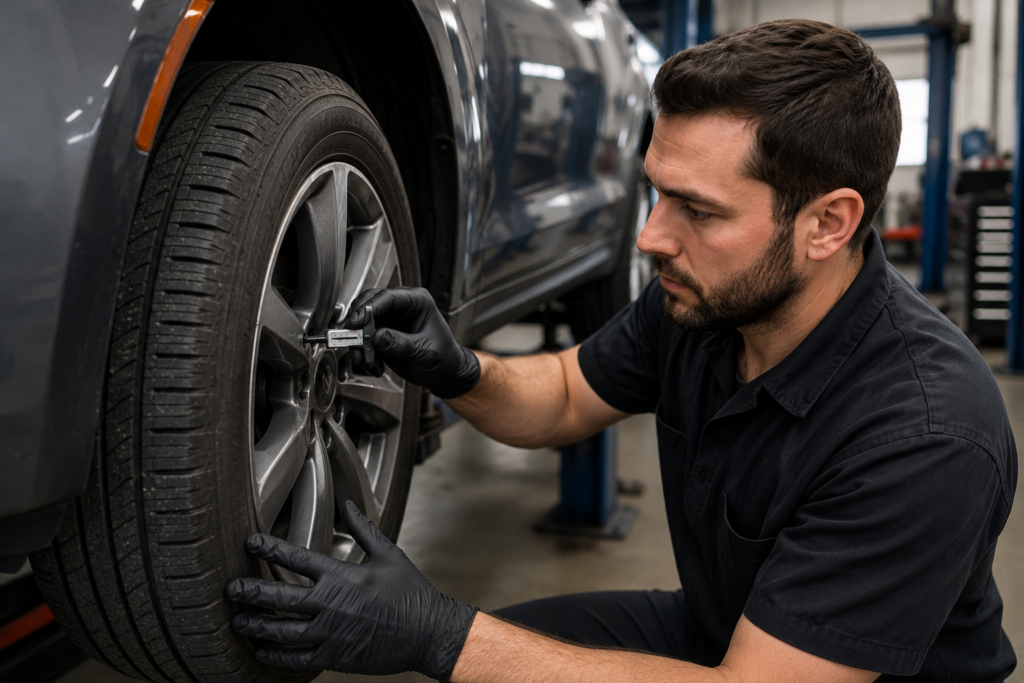
A proper tire inspection should include tread depth, tire pressure, sidewall condition, age, wear pattern, and visible damage. Uneven wear can tell a story. Wear on one edge may point toward alignment or suspension concerns. Cupping can suggest worn shocks or struts. Cracks, bulges, or exposed cords should be taken seriously.
The NHTSA TireWise guide explains that tire pressure, tread, rotation, balance, and alignment all affect safety and tire life. It also notes that tires are not safe once tread is worn to 2/32 of an inch.
In Illinois, tire checks matter even more because road conditions change quickly. Wet leaves, ice, slush, potholes, and heat all put different demands on tread and pressure.
Alignment and Steering: Why Pulling Should Not Be Ignored
Many drivers live with a vehicle that pulls slightly to the left or right. They adjust without thinking about it. Over time, that can become a bigger problem.
Alignment affects how the tires meet the road. Poor alignment can make tires wear unevenly, reduce stability, and make the vehicle harder to control. Steering inspections also look for looseness, leaks, worn tie rods, damaged components, or anything that affects how the vehicle responds.
If the steering wheel is crooked, the vehicle drifts, or the tires show uneven wear, it is worth having the front end checked. Hitting one hard pothole can be enough to change how the vehicle tracks.
Suspension Inspections: The System Drivers Feel but Rarely See
Suspension problems often show up as ride quality issues. The vehicle may bounce too much, clunk over bumps, feel loose in turns, dip forward during braking, or wear tires unevenly.
An inspection may include shocks, struts, springs, bushings, ball joints, control arms, and related hardware. Technicians also look for leaks, cracks, looseness, rust, and damaged parts.
Suspension does more than make the ride smoother. It helps keep tires in proper contact with the road. When parts are worn, braking and handling can suffer. That is why rough roads around the South Suburbs can create more than just an annoying noise.
A driver may come in because of a rattle. The real issue could be a worn suspension part affecting tire wear and steering response.
Battery and Charging System Checks
A weak battery can make a vehicle unpredictable. Sometimes it starts fine for weeks, then suddenly fails on a cold morning. Heat can weaken a battery during summer, while cold weather exposes that weakness when the engine needs more cranking power.
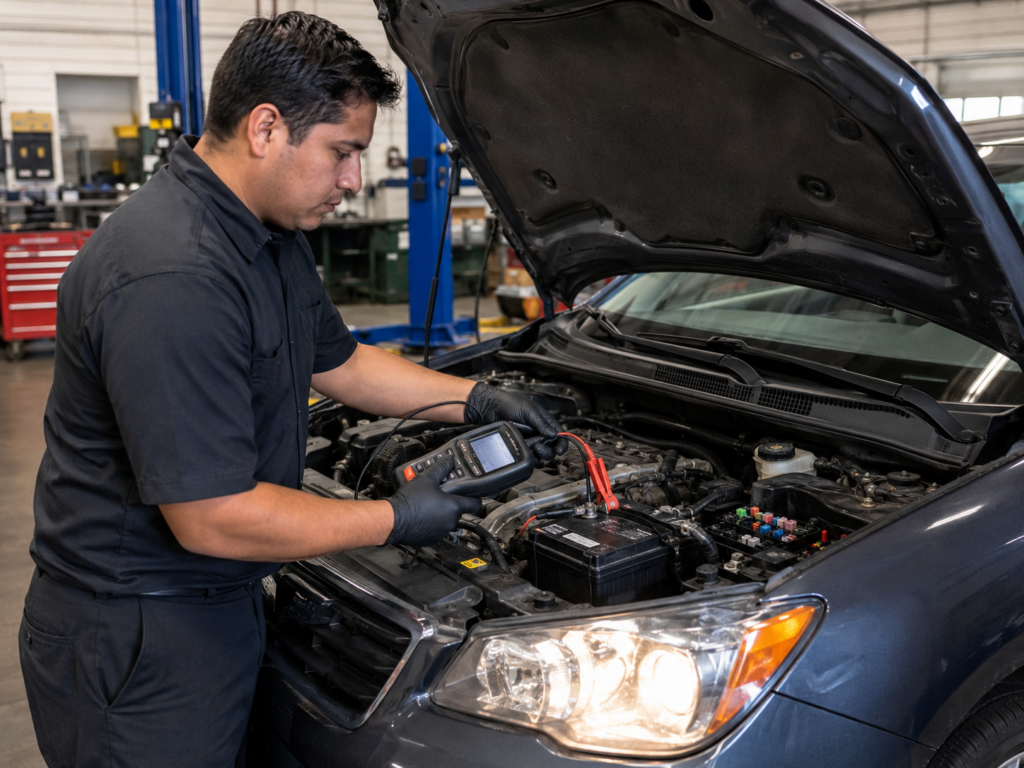
A good inspection should include the battery condition, terminals, cables, alternator output, and charging performance. Corrosion around the terminals, slow cranking, dim lights, clicking noises, or repeated jump starts all deserve attention.
Battery issues can also confuse diagnostics. Low voltage can cause strange warning lights or electronic behavior. Before replacing sensors or other parts, technicians often need to confirm that the electrical foundation is stable.
Lights, Wipers, and Visibility
These are simple items, but they affect safety every day. Headlights, brake lights, turn signals, reverse lights, hazard lights, and license plate lights should all work properly.
Wipers matter too. Streaking, skipping, cracked rubber, or poor windshield contact can become a real problem during heavy rain or snow. Washer fluid level and spray function should also be checked, especially before winter.
Drivers often overlook these items because the vehicle still runs. Still, being able to see and be seen is part of basic road safety.
Fluid Inspections: Small Leaks Can Tell Big Stories
A fluid inspection gives technicians a look at the health of multiple systems. Engine oil, coolant, brake fluid, transmission fluid, power steering fluid, and washer fluid each serve a different job.
Fluid checks are not only about levels. Condition matters. Dirty oil, low coolant, contaminated brake fluid, or fluid that smells burnt can point to developing problems. Leaks under the vehicle should also be identified instead of ignored.
An oil spot, coolant smell, reddish fluid, or wet area around a hose can all help locate a concern early. Vehicle Masters provides related information through its maintenance and general repair and oil change service pages.
Cooling System Checks: Preventing Overheating Before It Happens
Cooling problems can turn serious quickly. A vehicle may seem fine during short drives but overheat in traffic, on a hot day, or during longer trips.
A cooling system inspection may include the radiator, hoses, coolant level, coolant condition, thermostat operation, water pump area, pressure cap, fans, and visible leaks. Technicians also look for dried coolant residue, swollen hoses, cracking, corrosion, or low fluid.
Overheating can damage engines, so warning signs should not be brushed aside. Drivers should pay attention to rising temperature readings, coolant smells, steam, repeated low coolant, or heat that stops working properly in cold weather.
Belts and Hoses: Small Parts That Can Stop the Vehicle
Belts and hoses are easy to ignore because they usually fail quietly until they do not. Heat, age, and cold weather make rubber parts crack, stiffen, swell, or weaken.
A belt inspection looks for cracking, fraying, glazing, noise, or poor tension. A hose inspection checks for softness, bulging, leaks, cracks, and loose connections.
A failed belt can affect charging, cooling, steering assist, and other connected systems depending on the vehicle. A failed hose can cause coolant loss and overheating. These parts are not glamorous, but they are important.
Exhaust Inspections: Noise, Rust, Leaks, and Emissions
Exhaust concerns often start with sound. A vehicle may get louder, rattle underneath, smell unusual, or lose some performance. In areas where road salt is common, corrosion can speed up exhaust wear.
An inspection may include the muffler, pipes, hangers, gaskets, catalytic converter area, and visible leaks. Technicians also look for loose parts, rust holes, damaged shields, or signs that exhaust is not flowing correctly.
Exhaust leaks should not be ignored. Fumes, noise, emissions issues, and performance changes can all come from this system. The EPA explains that onboard diagnostic systems support inspection and maintenance programs by helping identify emissions-related problems and providing useful data for repair decisions.
Check Engine Lights and Diagnostic Checks
A warning light is not a diagnosis by itself. It is a signal that a system needs attention.
Modern diagnostics can involve scan data, live readings, visual inspection, wiring checks, sensor testing, pressure testing, and road testing. A code may point technicians toward the right system, but it does not always name the failed part.
For example, an emissions-related code may involve a sensor, wiring, exhaust leak, fuel delivery issue, misfire, or several other causes. Guessing can waste money. Testing helps narrow the problem down before parts are replaced.
Drivers should schedule service when a warning light stays on, flashes, returns after being cleared, or appears along with rough running, stalling, poor acceleration, overheating, or unusual smells.
Undercarriage and Rust Checks
Illinois winters are hard on the underside of a vehicle. Road salt and moisture can affect brake lines, exhaust components, suspension hardware, fuel lines, and other metal parts.
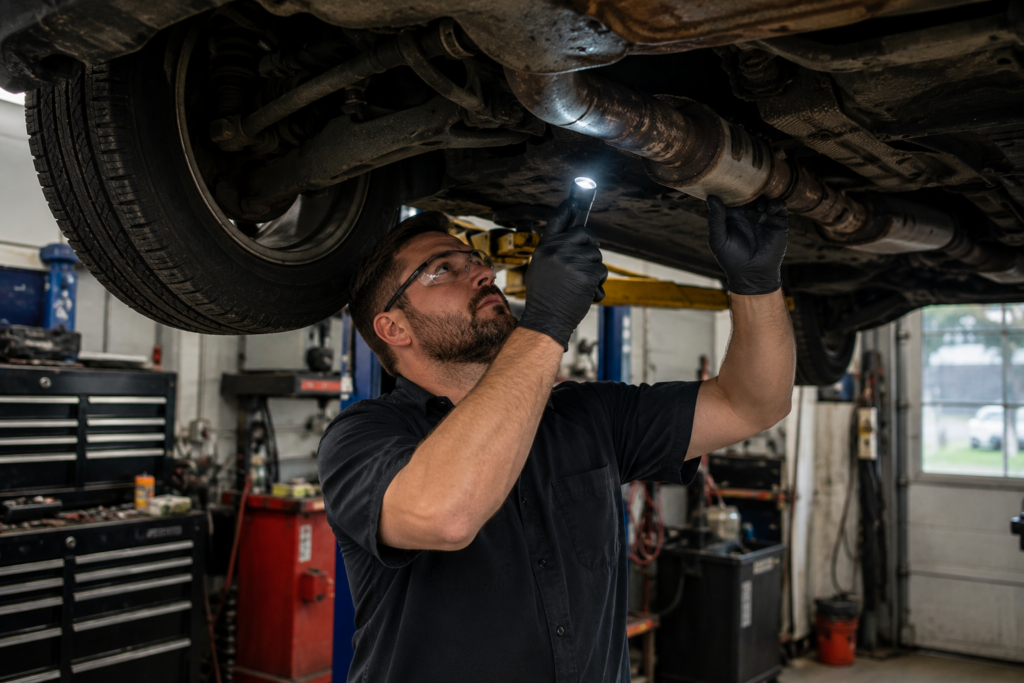
An undercarriage inspection can reveal corrosion, loose shields, leaks, worn bushings, damaged brackets, and impact damage from road debris. This is especially useful after winter or after driving through rough construction zones or pothole-heavy roads.
Rust does not always mean immediate danger, but some corrosion needs attention sooner than later. Brake lines, structural mounting points, and exhaust leaks deserve careful review.
Seasonal Inspection Timing for Oak Forest Drivers
A good inspection schedule should match local driving conditions.
Before winter, drivers should check the battery, tires, brakes, fluids, lights, wipers, belts, hoses, and heating performance. Winter is not the time to discover weak starting power or worn tires.
After winter, it is smart to check suspension, alignment, tires, brakes, exhaust, and undercarriage condition. Potholes and salt leave behind damage that may not be obvious from the driver’s seat.
Before summer, cooling system checks matter. Heat exposes weak hoses, low coolant, marginal fans, and worn belts. Airflow, fluid condition, and overheating signs should be handled early.
Before long trips, drivers should get a broad look at tires, brakes, fluids, lights, belts, hoses, battery condition, and any existing warning lights.
What Drivers Should Expect From a Transparent Inspection
Drivers should not leave confused. A good inspection should come with clear communication.
That means explaining what was checked, what was found, what is urgent, what can be monitored, and what should be planned for later. Not every worn part needs immediate replacement, but drivers deserve to know what is happening.
Helpful shops explain the “why” behind recommendations. Is the concern about safety? Is it about preventing more damage? Is it a maintenance item due by mileage? Is the part worn but still usable for now?
That kind of clarity helps drivers make better decisions without feeling pressured.
When an Inspection Should Not Wait
Some symptoms should move quickly to the top of the list.
Grinding brakes, a flashing check engine light, overheating, smoke, strong fuel or exhaust smells, major fluid leaks, severe vibration, sudden steering changes, repeated stalling, or a battery that keeps dying should all be checked promptly.
Other symptoms may not feel dramatic, but still matter. A small pull, uneven tire wear, an occasional clunk, or a slow start can be an early sign. Waiting often gives the problem time to spread.
A Safer Vehicle Starts With Knowing Its Condition
A thorough inspection is not about finding problems for the sake of it. It is about knowing the condition of the vehicle before small concerns become stressful, expensive, or unsafe.
Drivers who want a practical vehicle safety inspection can contact Vehicle Masters for honest diagnostics, clear maintenance guidance, and dependable repair support. Whether the concern involves auto brake repair, wheel alignment service, battery replacement service, radiator repair service, exhaust repair service, Vehicle Masters can help local drivers understand what their vehicle needs and why it matters.