
You turn the key or press the start button after your car has been sitting in the sun, and it hesitates.
Maybe the engine cranks slower than usual. Maybe the dashboard lights flicker for a second. Maybe it starts fine in the morning but struggles after sitting in a hot parking lot. A lot of drivers blame cold weather for battery trouble, but Summer heat can be just as hard on the starting and charging system.
Car battery problems caused by hot weather are especially concerning because they often build quietly. Heat weakens the battery over time, then one day the vehicle simply does not start. For drivers looking for battery replacement or alternator repair services, Summer is a smart time to check the system before the first real no-start happens.
What This Problem Usually Feels Like
Battery and charging issues do not always show up as a completely dead vehicle. Many drivers notice smaller signs first.
The vehicle may crank slowly after sitting outside. The engine may need a second attempt to start. Interior lights may dim during startup. You may hear clicking, or the dashboard may act strange for a moment before the engine catches.
Other signs can feel unrelated at first. Power windows may move slower. The radio or screen may reset. Headlights may seem weaker. A battery warning light may come on and disappear. The car may start normally one day, then struggle the next.
That inconsistency is one reason drivers delay service. If the vehicle starts eventually, it feels like the problem fixed itself. Most of the time, it did not.
What May Be Happening Behind the Scenes
A battery stores the electrical power needed to start the engine. The starter uses that power to crank the engine. Once the engine is running, the alternator helps recharge the battery and supports the electrical systems.
When heat weakens the battery, it may still have just enough power for normal driving but not enough reserve strength for reliable starting. The alternator may also be working harder than usual, especially when the air conditioning, cooling fans, lights, and other electrical systems are running at the same time.
That means a Summer starting problem is not always only a battery problem. The battery, alternator, cables, terminals, belts, and electrical connections all need to be checked together.
Why Heat Is So Rough on Batteries
Hot weather speeds up chemical activity inside a battery. That can increase internal wear and reduce the battery’s ability to hold a strong charge over time.
Consumer Reports explains that hot Summer temperatures drive up under-hood heat and can accelerate battery failure, even though many drivers expect winter to be the bigger problem. Their guide on how hot weather affects your car battery notes that heat can be especially damaging because the battery is exposed to both outside temperatures and engine compartment heat.
That is why a battery may weaken during Summer , then finally fail during the next cold snap. The damage often starts before the driver notices anything.
Common Causes of Summer Battery and Charging Problems
Weak Battery Capacity
A battery can test weak before it fully fails. It may still start the vehicle most days, but it has less reserve power than it should.
What you may notice:
- Slow cranking
• Clicking during startup
• Needing a jump start
• The vehicle starting better after cooling down
• Battery warning light or electrical glitches
A proper battery test checks more than whether the lights turn on. It should measure whether the battery can still deliver the power needed to start the engine reliably.
Corroded or Loose Battery Connections
Heat, age, moisture, and normal use can all contribute to corrosion around battery terminals. Loose or dirty connections can limit power flow, even when the battery itself is not completely dead.
AAA advises that battery cables should have clean, tight connections because dirty or loose connections limit current flow and are a common cause of battery issues. Its Summer battery guidance also recommends testing the charging system at the same time as the battery, since a faulty alternator can contribute to battery failure. You can read more in AAA’s article on Summer heat and vehicle batteries.
Alternator Strain
The alternator helps keep the battery charged while the engine runs. In Summer , it often has more work to do. The air conditioning system, radiator fans, blower motor, lights, infotainment system, and other electrical loads can all be active at once.
If the alternator is weak, the battery may not recharge properly. A driver may jump-start the vehicle, drive for a while, and then run into the same problem again.
Warning signs may include dim lights, battery warning lights, whining noises, or repeated dead-battery situations.
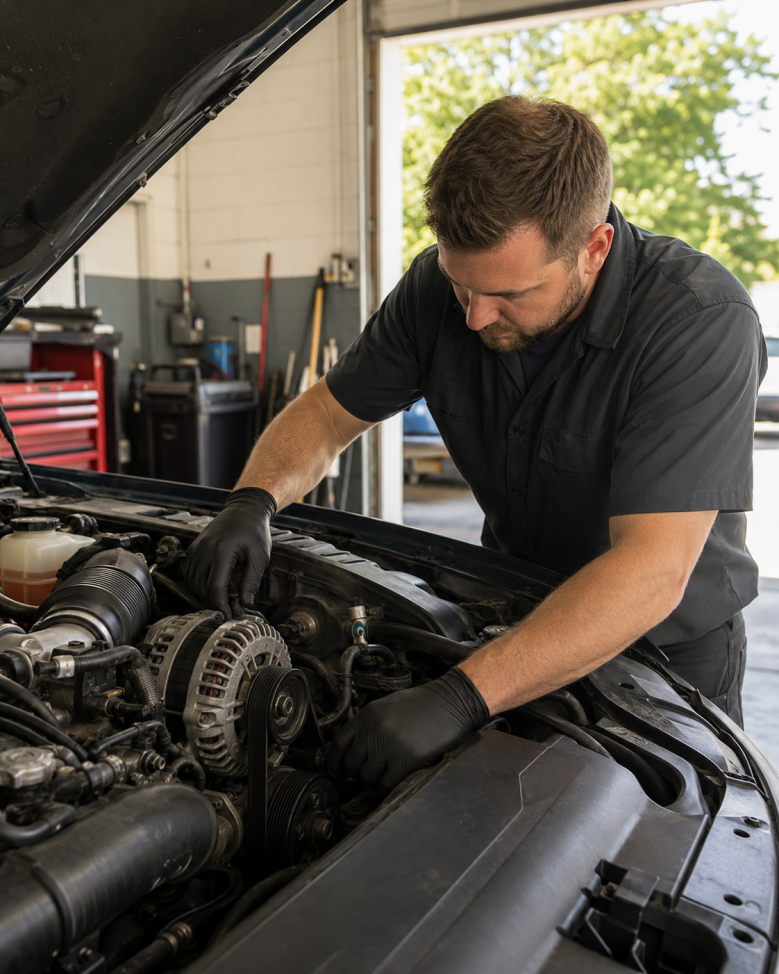
Belt or Tension Problems
On many vehicles, a belt helps drive the alternator. If that belt is worn, loose, cracked, or slipping, the alternator may not work as effectively.
Drivers may hear squealing, especially during startup or when accessories are running. A belt inspection is a small step that can prevent a much more frustrating problem.
Short Trips and Stop-and-Go Driving
Short trips can make battery issues worse because the charging system may not have enough time to recover the power used during startup.
This matters for local driving around Oak Forest and nearby South Suburbs communities. Quick errands, short commutes, school drop-offs, and stop-and-go traffic can all add up. The battery keeps working, but it may not get enough recharge time between starts.
Warning Signs You Should Not Ignore
Battery and charging problems are easier to handle before the vehicle is completely dead.
Pay attention to:
- Slow engine cranking
• Clicking when starting
• Dashboard lights flickering
• Battery warning light
• Corrosion around terminals
• Repeated jump starts
• Electrical accessories acting strange
• Burning smell near the engine bay
• Squealing belt noise
• Vehicle starts better when cool than when hot
One weak start may not mean disaster. A pattern should be checked.
Why Waiting Can Make the Repair More Expensive
Waiting too long can turn a simple battery or connection issue into a larger electrical problem.
A weak battery can put extra strain on the starter. A charging issue can leave the battery underpowered again and again. Corroded connections can create inconsistent starting behavior. A slipping belt can affect more than charging, depending on the vehicle’s setup.
There is also the practical cost of getting stranded. A no-start in a driveway is inconvenient. A no-start after work, at a gas station, or in a hot parking lot with groceries in the car is much worse.
Early testing helps narrow the issue down before the vehicle decides for you.
How Summer Driving Conditions Make It Worse
Hot weather does not only affect the battery. It affects the entire vehicle.
The engine bay gets hotter. Cooling fans run more often. The air conditioning works harder. Electrical loads increase. Traffic can keep heat trapped under the hood. If the battery or charging system is already weak, Summer exposes it quickly.
NHTSA recommends regular maintenance before Summer travel, including tune-ups, oil changes, battery checks, and tire rotations. Its Summer driving tips are a good reminder that heat-related breakdown prevention starts before the trip begins.
For Illinois drivers, Summer comes after months of winter salt, moisture, potholes, and temperature swings. Those conditions can affect cables, grounds, under-hood parts, and electrical connections before the heat even arrives.
What a Professional Inspection Should Check
A good battery and charging inspection should not stop at replacing the battery.
Depending on the symptoms, a technician may check:
- Battery age and test results
• Battery terminals and cable condition
• Charging system output
• Alternator performance
• Belt condition and tension
• Grounds and wiring connections
• Starter draw
• Warning light data
• Parasitic drain concerns
• Related maintenance history
Vehicle Masters provides maintenance and general repair support for drivers who want the full system checked instead of guessing. If warning lights are involved, check engine light diagnostics may also help identify related electrical or sensor concerns.
Common Mistakes Drivers Make
The biggest mistake is assuming a jump start fixed the issue.
A jump start only gets the vehicle running. It does not explain why the battery was low in the first place.
Other common mistakes include:
- Waiting until the vehicle will not start at all
• Replacing the battery without checking the alternator
• Ignoring corrosion on battery terminals
• Assuming heat cannot damage a battery
• Blaming the starter without testing the full system
• Driving with a battery warning light
• Ignoring belt noise
• Skipping a Summerinspection before long trips
The Car Care Council also notes that Summer heat can take a serious toll on batteries and recommends having the electrical system checked to make sure it is charging at the correct rate. Its article on Summer heat and car batteries reinforces why battery care should not wait until winter.
When to Bring Your Vehicle In
Schedule an inspection if the vehicle cranks slowly, needs repeated jump starts, shows a battery warning light, or starts acting strange electrically.
You should also bring it in before Summer travel if the battery is older, the vehicle has been sitting more than usual, or you are not sure when the system was last checked.
Do not wait for the first no-start. A quick test can often tell whether the battery is healthy, the charging system is doing its job, and the connections are clean and secure.
Get Clear Answers Before Summer Heat Leaves You Stranded
A weak start in hot weather is not something to shrug off. It may be a simple battery issue, but it may also involve charging, wiring, belts, or electrical connections.
Drivers dealing with car battery problems stemming from hot weather can contact Vehicle Masters for honest diagnostics, practical maintenance guidance, and dependable repair support. Vehicle Masters helps Oak Forest and South Suburbs drivers understand whether they need car battery replacement service, or a closer look at the charging system before Summer heat turns a small warning into a breakdown.