
There’s a particular kind of stress that comes from watching your temperature gauge climb while you’re stuck in bumper-to-bumper traffic with nowhere to go. What makes it especially puzzling is that the same vehicle often runs perfectly cool on the open highway. That specific pattern — a car overheating in traffic but fine at speed — is actually a valuable diagnostic clue. For drivers in Oak Forest and across the South Suburbs, understanding what it points to can prevent serious engine damage.
The reason this pattern matters is airflow. At highway speed, air rushes through the radiator naturally. In stop-and-go traffic, the vehicle depends on other components to keep things cool — and that’s where faults reveal themselves.
Why Traffic Is Different From Highway Driving
The distinction between the two situations explains the overheating:
- Highway airflow is automatic — movement forces air through the radiator, cooling the coolant efficiently.
- Traffic relies on the fan — when the vehicle is stopped or crawling, the cooling fan must pull air through the radiator.
- Heat builds with idling — an engine generates heat continuously, even when the vehicle isn’t moving.
- The pattern is a clue — overheating only in traffic points directly toward the fan or airflow-related components.
The Most Likely Causes
When a vehicle overheats specifically in traffic, these are the usual suspects:
- A failing cooling fan — if the fan doesn’t engage properly, there’s no airflow when the vehicle is stopped.
- A bad fan relay or sensor — the fan may be fine, but a faulty relay or temperature sensor fails to switch it on.
- A clogged radiator — reduced flow or blocked fins limit the radiator’s ability to shed heat.
- Low coolant — insufficient coolant reduces the system’s overall cooling capacity.
- A failing water pump — weak coolant circulation shows up first in the demanding conditions of traffic.
The Warning Signs to Watch
Catching the problem early prevents catastrophic damage:
- Temperature gauge climbing in traffic — the clearest signal, especially if it drops once you’re moving again.
- The fan never seeming to run — no fan noise when stopped and hot is a red flag.
- Sweet coolant smell — can indicate a leak reducing coolant levels.
- Steam or coolant loss — visible signs that demand immediate attention.
According to Consumer Reports’ guidance, overheating is one of the most damaging problems an engine can face — and one of the most preventable with proper cooling system maintenance. The U.S. Department of Energy adds that maintaining the cooling system is essential to keeping an engine operating safely and efficiently.
Why You Can’t Ignore It
Overheating is never something to drive through:
- Sustained overheating can warp or crack the engine, leading to catastrophic damage
- A blown head gasket often results from repeated overheating
- Continued driving turns a moderate repair into engine replacement
- The safest response is to stop and let the engine cool
How the Cause Is Diagnosed
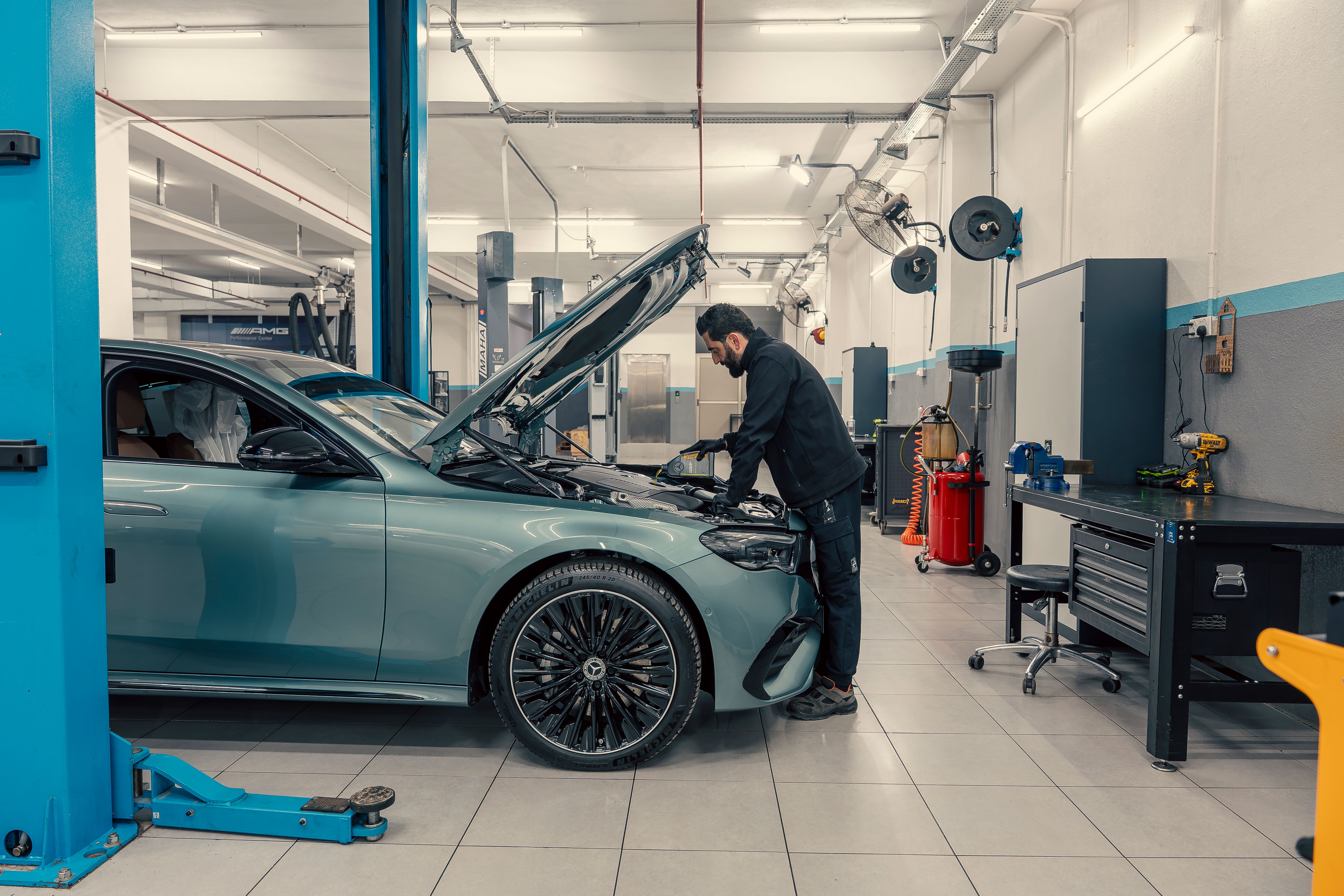
Pinpointing the fault requires checking the whole cooling system:
- Testing the cooling fan — confirming it engages when it should.
- Checking the relay and sensor — verifying the components that control the fan.
- Pressure-testing the system — finding leaks and confirming the radiator flows properly.
- Inspecting the water pump — confirming strong circulation through professional cooling system service.
What to Do the Moment It Starts Overheating
Knowing how to react when the temperature gauge climbs can be the difference between a minor issue and a destroyed engine:
- Turn off the AC —this reduces load on the engine and cooling system immediately.
- Turn on the heater —it draws heat away from the engine, buying you time.
- Pull over safely —if the gauge keeps climbing, stop and let the engine cool.
- Don’t open a hot radiator —wait for the system to cool to avoid injury.
How Regular Maintenance Prevents Traffic Overheating
The best way to handle a traffic overheating problem is to prevent it entirely through consistent cooling system care:
- Coolant flushes —fresh coolant maintains proper heat transfer and corrosion protection.
- Fan checks —confirming the cooling fan works is essential for stop-and-go driving.
- Radiator inspection —a clean, unobstructed radiator sheds heat efficiently.
- Component monitoring —catching a weak water pump or thermostat early prevents overheating.
Frequently Asked Questions
Q: Why does my car overheat in traffic but not on the highway?
A: At highway speed, air naturally flows through the radiator to cool the engine. In stop-and-go traffic, the vehicle depends on the cooling fan to move that air. If the fan or a related component is failing, the engine overheats when stopped but stays cool when moving — a pattern that points directly to the fan or airflow system.
Q: Is it safe to keep driving if my car is overheating?
A: No. Continuing to drive an overheating engine risks severe, expensive damage, including a warped head or blown head gasket. If your temperature gauge climbs into the danger zone, turn off the AC, turn on the heater, and pull over safely to let the engine cool. Overheating is never something to drive through.
Q: What’s the most common cause of overheating in traffic?
A: A failing cooling fan or a faulty fan relay or sensor is among the most common causes, since the fan is what keeps air moving when the vehicle is stopped. A clogged radiator, low coolant, or a weak water pump can also contribute. A full cooling system inspection identifies the exact cause.
Preventive Habits for Hot-Weather Driving
Summer heat and heavy traffic are a tough combination, but a few habits help keep your cooling system ready for both:
- Check coolant before summer —starting the hot season with fresh coolant matters.
- Watch the gauge in traffic —early awareness lets you react before overheating becomes serious.
- Don’t ignore small signs —a slightly high gauge or sweet smell deserves prompt attention.
- Keep up with inspections —a pre-summer cooling check catches problems before the heat arrives.
Keep Your Cool in Any Traffic
If your temperature gauge climbs when you’re stuck in traffic, don’t wait for it to become an engine-destroying event. Give us a call at 708-687-9955. At Vehicle Masters, we’ve served Oak Forest and the South Suburbs for over 30 years, and our team inspects the entire cooling system to find exactly why it’s overheating before recommending any radiator repair. Quality service, competitive pricing, customer satisfaction — we’re highly recommended.