
You walk out to your car and notice a puddle underneath it. Is it engine oil, coolant, brake fluid, or something harmless? The color, smell, location, and consistency of the liquid can offer useful clues. Understanding car leaking fluid colors helps you recognize potential problems and decide whether it is safe to drive or time to call a mechanic.
However, color alone cannot confirm the source of a leak. Different fluids can look similar, and older fluids may change color as they collect dirt or deteriorate. Before replacing any parts, a mechanic needs to identify the fluid and inspect the system it came from.
Brown or Black Fluid: Could It Be Engine Oil?
Engine oil lubricates moving engine parts and helps control friction and heat. Fresh oil is typically amber or golden brown, while used oil often becomes dark brown or black.
What you might notice:
- A greasy puddle beneath the engine.
- An oily smell after parking.
- An oil-level warning or low reading on the dipstick, if your vehicle has one.
- Smoke or a burning-oil smell if leaking oil reaches hot engine components.
Possible sources include a loose drain plug, a damaged oil filter seal, a worn gasket, or a leak around the valve cover. Oil spilled during a recent service can also leave residue that drips later.
An inspection can help distinguish an active leak from leftover oil or fluid running down from another area. If the engine oil warning light indicates low oil pressure, pull over safely and shut off the engine. Continuing to drive can cause severe engine damage.
Routine oil change service also provides an opportunity to check fluid levels and look for visible leaks. If you notice fresh oil after maintenance, have the source checked rather than assuming the leak is harmless.
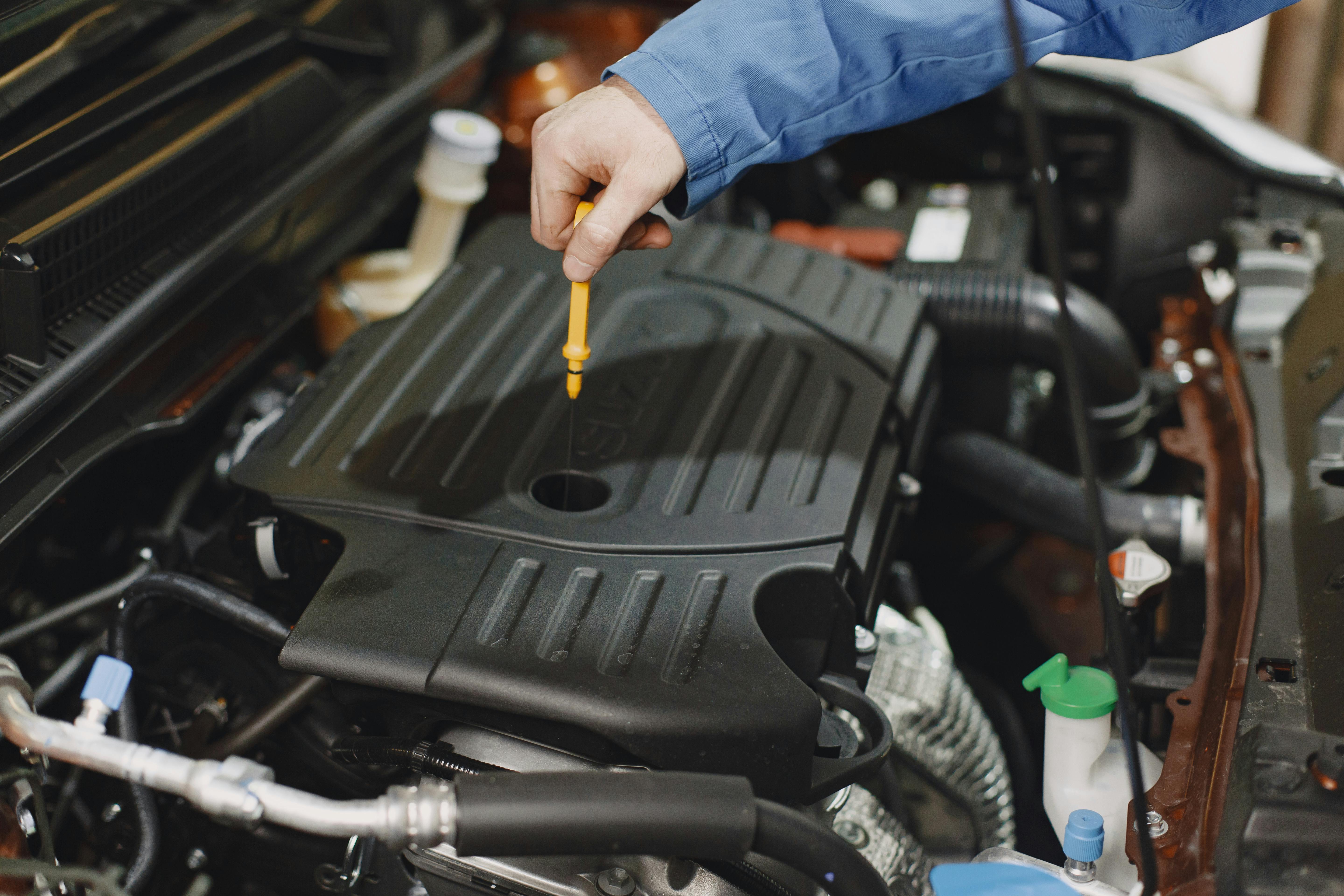
Green, Orange, Pink, or Yellow Fluid: Check the Cooling System
Coolant carries heat away from the engine and helps prevent overheating. Depending on the vehicle and coolant formulation, it may be green, orange, pink, yellow, blue, or another shade.
Common signs of a coolant leak include:
- A brightly colored puddle with a slightly sweet smell.
- A falling coolant level in the reservoir.
- Dried, crusty deposits around hoses or connections.
- A rising temperature gauge or an engine temperature warning.
Potential causes include a damaged hose, a loose connection, a leaking radiator, a faulty thermostat housing, or a failing water pump. A radiator cap or other cooling system component may also be responsible.
A cooling system repair service can help identify the source through a visual inspection and, when appropriate, pressure testing. A radiator repair service may be needed if the radiator is leaking, but the inspection should establish whether the radiator itself is responsible.
Likewise, a water pump repair service may be appropriate if testing identifies a leak at the pump or its seals. Coolant appearing near the front of the engine does not automatically mean the water pump has failed.
Never open a hot radiator cap or coolant reservoir. Pressurized coolant can cause serious burns. If the engine overheats, pull over somewhere safe, shut it off, and let it cool. Do not continue driving to see whether the temperature drops.

Red or Reddish-Brown Fluid: Transmission or Power Steering?
Red fluid can point to a transmission or power steering system leak, although the exact color and fluid type depend on the vehicle. Used fluid may turn brown as it ages.
Transmission fluid helps lubricate and operate the transmission. A leak may leave reddish or brown oily spots beneath the vehicle. You might also notice delayed engagement, slipping, unusual shifting, or a transmission warning.
Power steering fluid, in vehicles with hydraulic steering, can also appear red or amber. A leak may cause whining noises while turning or make the steering wheel harder to operate. Some vehicles use electric power steering and do not have hydraulic steering fluid.
The location of the puddle can help, but fluids may travel along underbody components before dripping. A mechanic can inspect the lines, seals, connections, and fluid levels to narrow down the source.
If steering suddenly becomes difficult, stop driving when it is safe to do so. If the transmission shows severe symptoms or loses enough fluid to affect operation, arrange professional assistance rather than risking further damage.
Clear or Watery Fluid: Is It Just Air Conditioning Condensation?
A small puddle of clear, odorless water under the front passenger side of your car is often normal, especially after running the air conditioner. The system removes moisture from the cabin, and that water drains beneath the vehicle.
However, not every clear liquid is harmless.
Check for these differences:
- Air conditioning condensation: Usually clear, watery, and odorless, with no change in engine fluid levels.
- Brake fluid: May be clear to pale yellow, feels slippery, and can appear near a wheel or beneath the master cylinder.
- Fuel: May look clear or pale yellow and has a distinctive gasoline smell.
If you smell gasoline or suspect a fuel leak, do not start the engine or drive the vehicle. Keep away from ignition sources and arrange professional assistance. If you suspect a brake fluid leak, do not drive until the braking system has been inspected.
Yellow or Clear Fluid Near a Wheel: Could It Be Brake Fluid?
Brake fluid transfers force through the hydraulic braking system. A leak can reduce braking performance and may eventually make it difficult or impossible to stop safely.
Watch for these warning signs:
- A soft or sinking brake pedal.
- A brake warning light.
- A noticeable drop in brake fluid level.
- Clear, pale yellow, or brownish fluid near a wheel or beneath the vehicle.
A leak could originate from a brake line, caliper, wheel cylinder, master cylinder, or another hydraulic connection. Worn brake components may also contribute to braking problems, so a mechanic must inspect the system to determine the cause.
Do not drive if you suspect a brake fluid leak or notice a significant change in braking performance. Arrange a tow or other professional assistance. Simply adding fluid does not fix the underlying problem.
Vehicle Masters offers brake service and repair for drivers in Oak Forest and the surrounding South Suburbs.

Blue or Brightly Colored Fluid: Check the Washer System
Windshield washer fluid is often blue, although green, orange, purple, and other colors are available. It usually has a thin, watery consistency and may smell like glass cleaner.
A washer fluid leak may come from:
- A cracked reservoir.
- A damaged hose or loose connection.
- A faulty pump seal or connection.
You might notice the fluid beneath the front of the vehicle or find that the windshield washer stops spraying. Although this leak generally does not threaten the engine, an empty reservoir can leave you unable to clean the windshield when road grime, salt, or slush reduces visibility.
Check the washer fluid level and look for visible damage around the reservoir without reaching into moving or hot components. If the leak continues, have the system inspected.
Find the Source of Your Car’s Leak at Vehicle Masters
A puddle under your car is a symptom, not a diagnosis. Recognizing car leaking fluid colors can help you narrow down the possibilities, but identifying the actual source is what prevents unnecessary parts replacement and helps you address the problem correctly.
At Vehicle Masters, we inspect vehicle problems to determine their likely cause before recommending service. Depending on our findings, we can help with relevant diagnostic work, routine oil change service, and appropriate cooling system maintenance or repairs. Our goal is to explain what we find and help you understand the next step.
If you suspect a coolant leak, ask us whether a radiator repair, cooling system repair, or water pump repair service is appropriate for your vehicle after inspection.
We serve drivers in Oak Forest and the surrounding South Suburbs from our location at 6012 W. 159th Street, Oak Forest, IL 60452.
Call (708) 687-9955. Let us help you identify the leak before it develops into a more serious problem.