
Summer road trips are one of the best parts of the season — open highways, destinations that have been on the list all year, and time away from routine. But every summer, those same trips get interrupted by entirely avoidable breakdowns.
According to AAA, engine cooling system failures account for 11 percent of serious breakdowns requiring a tow, and the organization expects to rescue roughly 7 million drivers each summer, with car overheating ranking among the most common causes. The good news is that the vast majority of these breakdowns are preventable with the right preparation before the trip begins.
For drivers across the South Suburbs heading out this season, a thorough pre-trip inspection isn’t just a good idea — it’s the difference between a summer memory and a summer repair bill. Here’s what to address before putting serious miles on a vehicle in extreme heat.
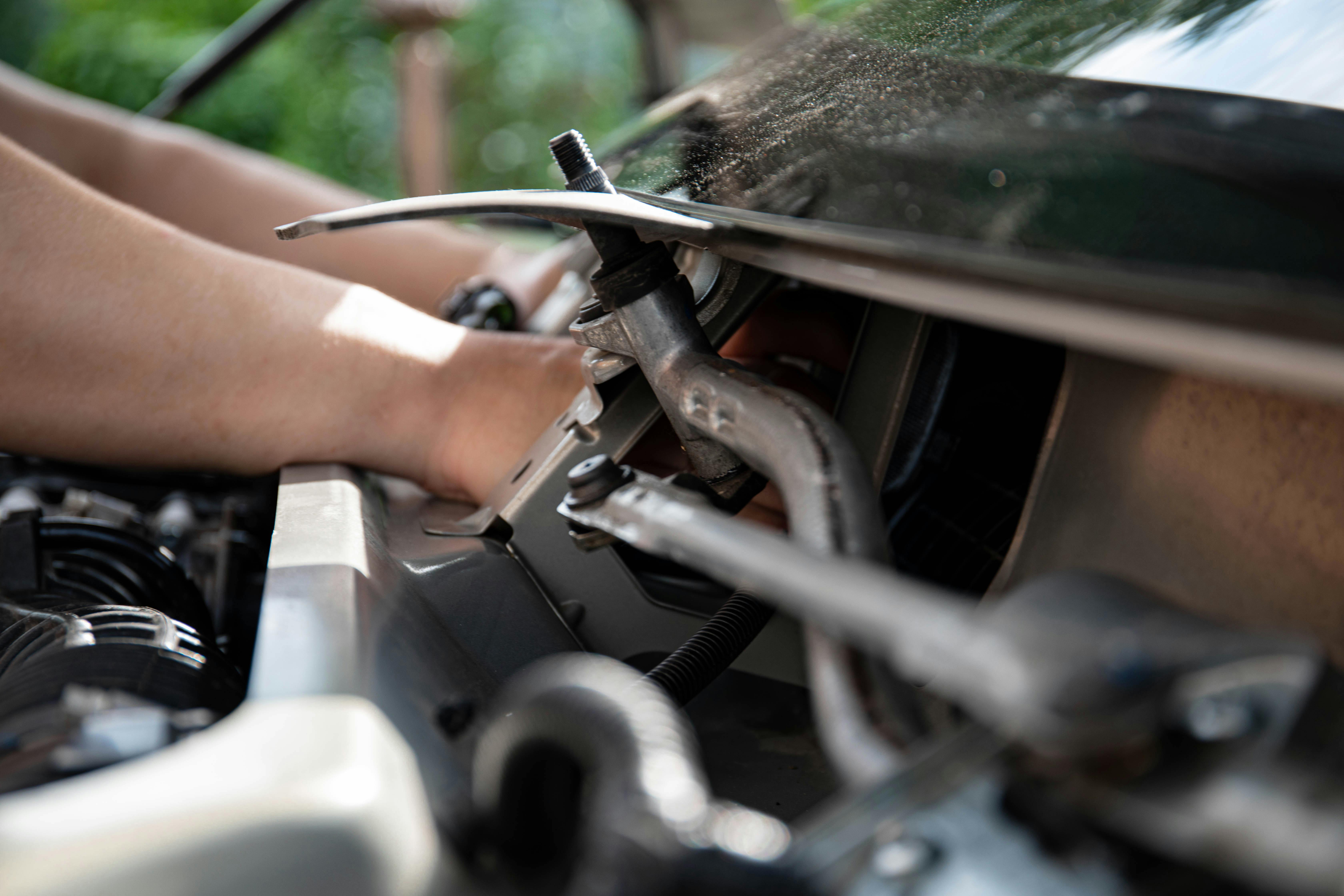
The Cooling System: Your First Priority
The cooling system is the most critical system to inspect before any summer trip, and the one most directly responsible for car overheating in summer. Every component in the cooling loop needs to be working correctly, because when one fails, engine temperature rises quickly — and on a highway in 90-degree heat with the AC running, it rises fast. Key components to inspect:
- Coolant level and condition — check with the engine cold. Low coolant points to a leak or consumption issue. Discolored or rusty coolant has degraded and needs a flush before summer driving puts it under sustained thermal stress.
- Radiator — inspect for debris buildup, bent fins, and leaks around hose connections. A radiator that can’t shed heat efficiently allows engine temperature to climb even when coolant levels are correct.
- Water pump — a worn pump circulates coolant more slowly, reducing the system’s ability to transfer heat under load. Any whining sound or visible leak near the pump warrants immediate attention.
- Thermostat — a stuck-closed thermostat causes immediate overheating. A stuck-open thermostat prevents the engine from reaching operating temperature, affecting fuel efficiency throughout the trip.
- Coolant hoses — squeeze each hose for softness, swelling, or brittleness. A deteriorating hose can fail under elevated summer pressure, causing rapid coolant loss within minutes.
Check Every Fluid Before You Leave
As AAA’s summer vehicle guidance emphasizes, proper fluid levels across all systems are one of the most effective defenses against heat-related breakdowns. Heat affects every fluid in a vehicle — not just coolant — and checking each one before a long trip eliminates an entire category of potential failures.
- Engine oil — oil thins under high temperatures, reducing its protective film between moving parts. If it’s near or past the service interval, change it before the trip.
- Transmission fluid — works significantly harder during towing, climbing grades, or sustained highway driving in heat. Check both level and condition.
- Brake fluid — absorbs moisture over time, which lowers its boiling point. In summer stop-and-go driving or on mountain descents, degraded brake fluid can vapor lock and cause sudden pedal loss.
- Power steering fluid — should be at the correct level and free from discoloration. Contaminated fluid stresses the pump and rack and is easy to address before it becomes a larger problem.
Air Conditioning: Comfort and Safety
A functioning AC system isn’t just about comfort on a long drive — it directly affects driver alertness and reaction time in summer heat. A system blowing warm air, cycling on and off, or underperforming at highway speeds typically signals low refrigerant, a failing compressor, or condenser debris. Any of these issues will worsen under sustained use.
- Refrigerant charge — low refrigerant is the most common reason an AC underperforms. A professional car air conditionerinspection confirms the system is properly charged and leak-free.
- Compressor and condenser — a compressor showing early signs of failure or a debris-clogged condenser should be addressed before a long trip, not during one.
- Cabin air filter — a clogged filter restricts airflow and forces the system to work harder. Replacing it before departure is low-cost and makes a real difference in both cooling efficiency and air quality.
Tires: The Most Overlooked Summer Risk
Hot asphalt and underinflated tires are a dangerous combination. Heat causes tire pressure to increase as air expands — but a tire that starts a trip underinflated will flex excessively under load, generate internal heat, and become significantly more prone to blowouts at highway speed.
- Tire pressure — check all four tires, plus the spare, when the vehicle is cool. Inflate to the manufacturer’s recommended level, not the maximum listed on the tire sidewall.
- Tread depth — worn tires lose the ability to channel water away from the contact patch, increasing hydroplaning risk on summer rain-slicked highways.
- Uneven wear patterns — scalloping or one-sided wear points to an alignment or suspension issue that should be resolved before the trip. A wheel alignment servicenow prevents the problem from worsening over highway miles.
- Sidewall condition — look for cracking, bulging, or visible damage. Any of these signs on a tire heading into a long trip means replacement before departure, not a risk to take on the road.
Brakes and Suspension: Don’t Head Out on Compromised Systems
Long stretches of highway, mountain roads, and heavy traffic all demand more from braking and suspension systems than typical daily driving. Heading into a road trip with worn brakes or compromised suspension components increases both repair risk and safety risk.
- Brake pads and rotors — any squealing, grinding, pulling, or soft pedal feel is a reason to schedule auto brake repairbefore departure, not after.
- Shocks and struts — worn shocks that produce excessive bounce affect vehicle stability and braking distance on long highway runs.
- Steering components — looseness, vibration, or pulling at highway speed should be evaluated. The last place to discover a suspension problem is while merging at 70 mph.
FAQ: Car Overheating in Summer
Q: What are the first warning signs that an engine is starting to overheat?
A: The temperature gauge climbing above its normal range is the clearest early indicator. Steam rising from under the hood, a sweet or burning smell from the engine bay, or the AC suddenly blowing warm air can also signal rising engine temperature. If any of these appear while driving, reduce speed, turn off the AC, and pull over safely. Running an overheating engine, even for a short distance, can cause severe and expensive internal damage.
Q: How often should the cooling system be serviced?
A: Most manufacturers recommend a coolant flush every 30,000 to 50,000 miles, though this varies by vehicle. Beyond mileage, the condition of the coolant itself matters — discolored, depleted, or contaminated coolant should be flushed regardless of mileage. A cooling system inspection before any long summer trip provides the most accurate picture of the system’s condition.
Q: Is it safe to add water to the coolant reservoir in an emergency?
A: Plain water can be used as a temporary emergency measure if the vehicle is overheating and no coolant is available. However, water alone doesn’t provide the corrosion protection or freeze-point modification that a proper coolant mixture does, and should be replaced with the correct coolant as soon as possible. Never open the coolant reservoir or radiator cap when the engine is hot — pressurized coolant will spray and cause serious burns.
Heading Out This Summer? Let’s Make Sure You’re Ready.
A summer road trip should be memorable for the right reasons. If your vehicle is due for a pre-trip inspection — or if anything in this guide sounds familiar — give us a call at 708-687-9955 before you hit the road.
At Vehicle Masters, we check every major system, tell you exactly what we find, and help you prioritize what your vehicle actually needs before the miles add up. From cooling system service to exhaust and emissions checks, we’ve been keeping South Suburbs vehicles road-ready for over 30 years. Quality service, competitive pricing, customer satisfaction — we’re highly recommended, and we’d love to help you have a great summer.