
Your vehicle talks to you constantly, and most of the time it speaks in sounds. A new squeal when you brake, a hum that grows louder on the highway, or a tick that seems to follow the engine speed is often the very first sign that something is wearing out. Some of these sounds are harmless quirks, while others are warnings that need attention right away. This car noises meaning guide translates the most common noises into plain language, so you can tell the difference between a minor annoyance and a real problem. For drivers in Oak Forest and across the South Suburbs, catching a noise early is one of the simplest ways to avoid an expensive repair.
In more than three decades of diagnosing vehicles, we have found that drivers usually hear a problem long before a warning light appears. The trick is knowing what the sound is trying to tell you and how quickly you need to act on it.
Why Paying Attention to Noises Matters
Turning up the radio is tempting, but listening carefully pays off in several ways:
- Noises are early warnings. Most mechanical failures make some kind of sound well before they stop the vehicle.
- Early repairs cost less. A squeal caught early might mean new brake pads, while a grind ignored for weeks can mean pads, rotors, and calipers.
- Some sounds point to safety issues. Brake, steering, and suspension noises often signal wear in the systems that keep you in control.
- Good descriptions speed up diagnosis. When you can explain what you hear and when you hear it, a technician can narrow down the cause much faster.
Squealing and Squeaking

High-pitched squeals are among the most common sounds drivers notice. Where and when they happen tells you a lot:
- When you brake: most pads have a small metal wear indicator that squeals on purpose when the pads get thin. Promptauto brake repair at this stage usually means a simple pad replacement.
- When you start the engine or turn the wheel: a slipping or worn serpentine belt often squeals under load, especially on cold or damp mornings.
- When you go over bumps: dry or worn suspension bushings and ball joints can squeak as the suspension moves.
- When the air conditioning kicks on: a belt struggling with the added load of the compressor, or a compressor beginning to fail.
- How urgent it is: usually something to schedule soon rather than an emergency, unless the squeal changes into a grind.
Grinding
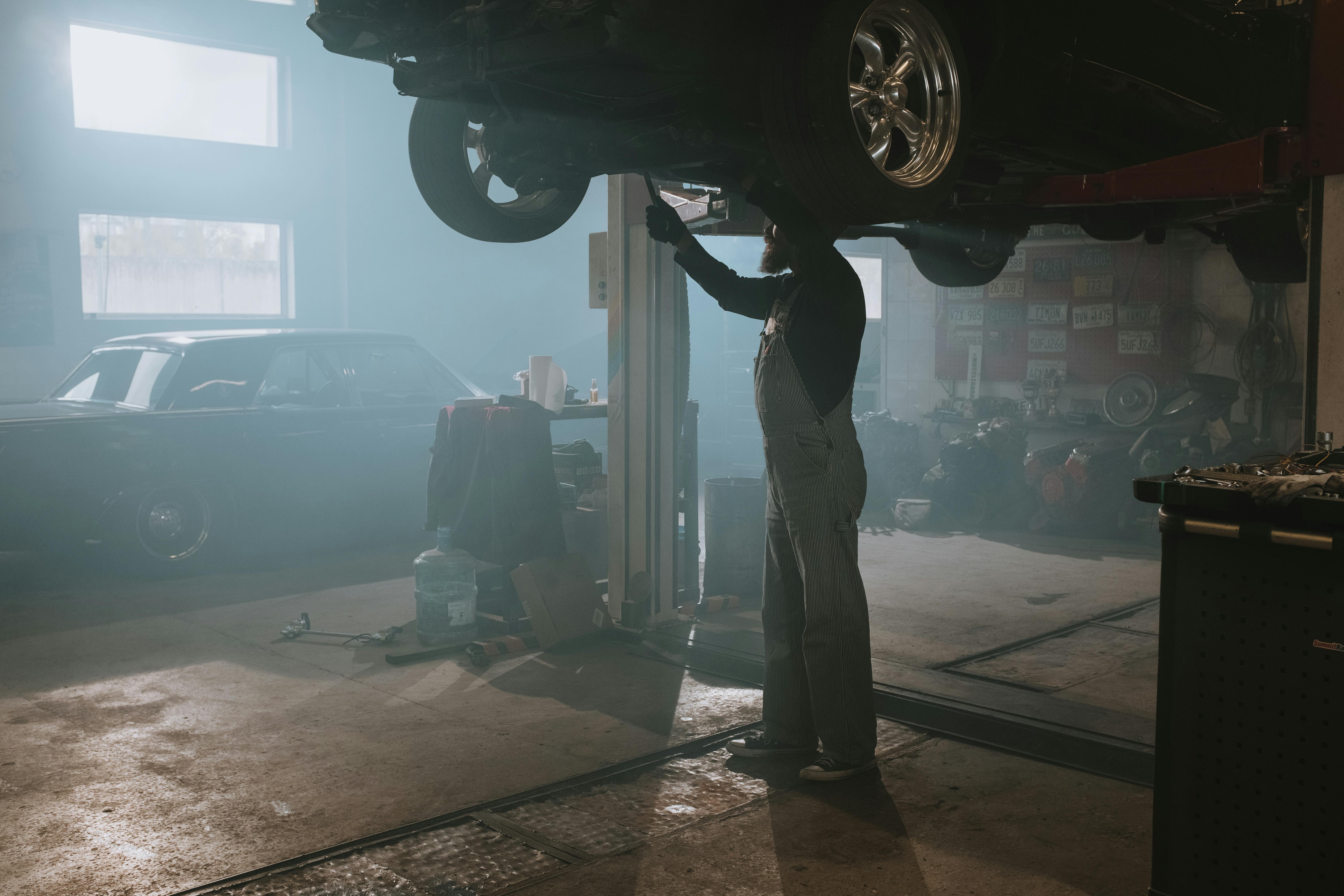
Grinding is a harsh, metallic sound, and it is almost always a sign that something has worn past its limit:
- When you brake: the pads are likely gone and metal is contacting the rotor. Every stop now causes more damage and reduces stopping power.
- When you shift gears: a worn clutch, low transmission fluid, or worn synchronizers in a manual transmission.
- When you turn: a failing wheel bearing or a damaged CV joint, both of which affect safety if ignored.
- When you start the vehicle: a starter gear that is not engaging properly with the flywheel.
- How urgent it is: Grinding brakes in particular should be inspected right away, and the vehicle driven as little as possible until then.
Clunking and Thudding

A heavy clunk usually comes from underneath the vehicle and points to something loose or worn in the suspension or drivetrain:
- Over bumps and potholes: worn shocks, struts, sway bar links, or control arm bushings. Timely suspension repairrestores a stable, quiet ride.
- When you shift into drive or reverse: worn engine or transmission mounts, or a failing universal joint on rear-wheel-drive vehicles.
- When you brake hard: a loose caliper, worn suspension components, or excessive play in the steering linkage.
- When you turn the steering wheel: worn tie rod ends or ball joints, which directly affect steering control.
- How urgent it is: moderate to high, especially when the clunk comes with looseness in the steering or a wandering feel on the highway.
Engine Knocking and Pinging
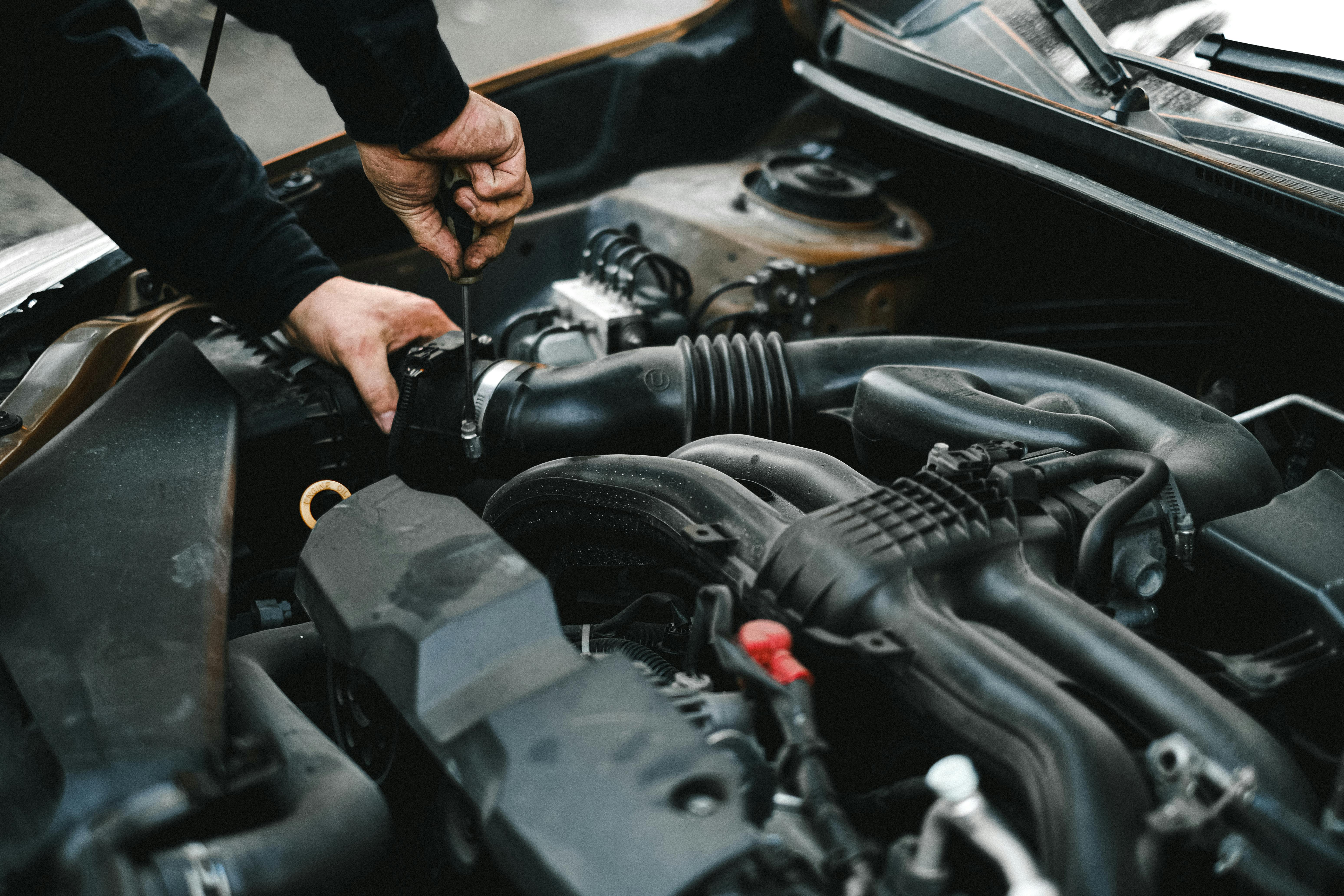
Noises from inside the engine deserve special attention, because engine damage is among the most expensive repairs a driver can face:
- A deep, rhythmic knock that rises with engine speed can indicate worn internal bearings, often caused by low oil or oil starvation. Stop driving and have it checked.
- A light pinging under acceleration often points to pre-ignition, which can come from carbon buildup, the wrong fuel grade, or a sensor or timing issue.
- A knock that appears only when the oil is low is a sign the engine is not getting enough lubrication, so check the oil level immediately.
- How urgent it is: high for any deep knock. Moderate for occasional pinging, which still deserves a prompt diagnosis.
Humming, Whining, and Droning
Steady humming and whining sounds tend to grow gradually, which makes them easy to ignore until they become loud:
- A hum that rises with road speed: a worn wheel bearing or unevenly worn tires. Bearing noise often changes when you gently steer left or right.
- A whine when you turn the steering wheel: low fluid or a struggling pump in the power steering system.
- A whine that follows engine speed: a failing alternator bearing, a worn pulley, or a tensioner on its way out. Accurate alternator repair serviceconfirms which part is responsible.
- A whine while driving in gear: worn transmission or differential components, often paired with fluid that needs attention.
- How urgent it is: Most hums and whines can be scheduled within days, but they rarely go away on their own.
Ticking and Tapping
Ticks and taps are usually quick, light sounds that keep pace with the engine or the wheels:
- A tick at startup that fades within a minute: oil reaching the upper engine after the vehicle sits, which is common in many engines.
- A persistent tick that does not fade: low oil, worn valve train components, or a lifter that needs attention.
- A tick that gets louder on acceleration: a small exhaust manifold leak, often from a cracked manifold or failed gasket.
- A tick that matches wheel speed: a stone stuck in the tread or a nail in the tire, which is worth checking before it causes a flat.
- How urgent it is: low to moderate, but always check the oil level first, since low oil turns a minor tick into a major problem.
Hissing and Sizzling

Hissing usually means something is escaping, whether it is air, steam, or fluid:
- A hiss under the hood while the engine runs: a vacuum leak, which can also cause a rough idle and a check engine light.
- A sizzle after you shut the engine off: fluid dripping onto a hot surface, often coolant or oil.
- Hissing with a sweet smell or steam: a coolant leak from a hose, the radiator, or the water pump. Dependable cooling system repair serviceprevents the overheating that follows.
- How urgent it is: high if the temperature gauge is rising or steam is visible. Pull over and let the engine cool before going further.
Rattling and Roaring
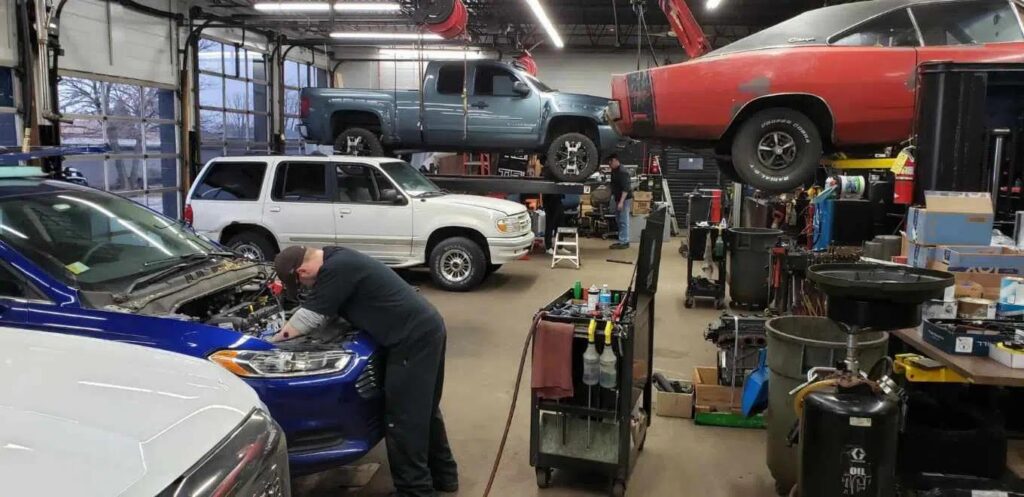
Rattles and roars most often come from the exhaust system, though not always:
- A rattle underneath at idle: a loose or rusted heat shield, which is usually a simple fix.
- A rattle like loose gravel in a can: broken internals inside the catalytic converter, which can restrict exhaust flow. Proper diagnosis comes before any catalytic converter replacement.
- A roar that gets louder over time: a hole in the muffler or a failing exhaust pipe. Quality muffler repair servicekeeps fumes flowing safely away from the cabin.
- A rattle from the dashboard or doors: loose trim or an item in a storage compartment, which is annoying but rarely a mechanical concern.
- How urgent it is: moderate for exhaust noises, since leaks can allow fumes into the cabin. Low for interior rattles.
Clicking
Clicks are short, sharp sounds, and their meaning depends heavily on when they happen:
- Clicking when you make tight turns: a worn CV joint on a front-wheel-drive vehicle, often with a torn protective boot.
- Rapid clicking when you try to start: a battery that does not have enough power to turn the starter.
- A single click with no start: a failing starter or solenoid, especially if the battery tests healthy.
- Clicking from a wheel at low speed: a loose hubcap, a stone in the tread, or a loose wheel component that should be checked.
Matching the Noise to the Moment
When a sound happens is often just as revealing as what it sounds like. Use these patterns to narrow things down:
- Only when braking: pads, rotors, calipers, or brake hardware.
- Only when turning: CV joints, power steering, wheel bearings, or steering linkage.
- Only when accelerating: exhaust leaks, engine mounts, or pinging from the engine.
- Only at idle: belts, valve train components, or loose heat shields.
- Only over bumps: shocks, struts, bushings, and sway bar links.
- Only at highway speed: tire wear, wheel balance, or wheel bearings.
How Urgent Is It? A Simple Triage
Not every noise means you need to stop the car, but some do. Here is a practical way to sort them:
- Stop driving soon: grinding brakes, a deep engine knock, hissing with a climbing temperature gauge, and loud clunks paired with loose steering.
- Schedule service within days: persistent brake squeals, whining steering, humming bearings, clicking during turns, and growing exhaust roars.
- Mention it at your next visit: a brief morning squeal from surface rust, a startup tick that fades quickly, or light interior rattles.
According to NHTSA’s vehicle safety research, brakes, steering, and suspension are among the systems most closely tied to crash avoidance, which is why noises from these areas deserve prompt attention. Consumer Reports’ car repair handbook encourages drivers to note exactly when a sound occurs to help with diagnosis, and the Federal Trade Commission advises drivers to address warning signs early to avoid costlier repairs.
How to Describe a Noise to Your Technician
The more detail you share, the faster the cause can be found. Before your appointment, try to note:
- What it sounds like, whether squealing, grinding, clunking, humming, ticking, hissing, or rattling.
- Where it seems to come from, such as the front, rear, one wheel, under the hood, or underneath.
- When it happens, including braking, turning, accelerating, idling, or going over bumps.
- Whether it changes with speed, engine temperature, or weather.
- How long it has been going on and whether it is getting louder or more frequent.
- A short phone recording, which can be surprisingly helpful when a noise refuses to appear during a test drive.
How Professionals Diagnose Vehicle Noises
Finding the true source of a noise takes a careful, methodical approach rather than guesswork:
- A test drive with the driver to reproduce the noise under the same conditions it normally appears.
- An inspection on a lift to examine brakes, suspension, exhaust, and drivetrain components up close.
- Specialized listening tools that help pinpoint which component is making the sound.
- Confirmation before replacement, so you only pay for the part that is actually causing the noise.
Frequently Asked Questions
Q: Is every new noise a sign of a problem?
Not always. Some sounds are normal, such as a brief brake squeal after rain or a light tick at startup that fades quickly. The key is change. If a noise is new, getting louder, or showing up more often, it is worth having checked, because that pattern usually means a component is wearing.
Q: Why does my car only make noise when it is cold?
Cold weather affects rubber, metal, and fluids. Belts can squeal until they warm up, oil takes longer to reach the upper engine, and suspension bushings stiffen in low temperatures. A noise that fades as the vehicle warms is often minor, but a cold-only noise that keeps getting worse still deserves an inspection.
Q: Can a noise go away on its own?
Occasionally, such as when surface rust wears off the rotors or a stone falls out of the tread. Most mechanical noises, however, only get quieter because the driver gets used to them. If a sound disappears suddenly after being persistent, it is still worth mentioning at your next service.
Q: Can I keep driving until my next scheduled service?
It depends on the noise. Light squeaks, fading startup ticks, and interior rattles can usually wait. Grinding brakes, deep engine knocks, hissing with overheating, and clunks that affect steering should be checked right away. When in doubt, a quick inspection is far cheaper than the damage a failed part can cause.
Q: What is the best way to help a technician find an intermittent noise?
Write down when it happens, where it seems to come from, and what conditions trigger it, then record it on your phone if you can. Offering to go on a short test drive with the technician is also one of the fastest ways to reproduce and identify an intermittent sound.
Let Us Track Down That Noise
A strange noise is your vehicle asking for attention, and we are glad to help you understand what it means. At Vehicle Masters, we have served Oak Forest and the South Suburbs for over 30 years, and our team listens carefully, test drives with you when needed, and confirms the real cause before recommending any work. If something sounds off, give us a call at 708-687-9955 and let our experienced car mechanics find the source. Quality service, competitive pricing, customer satisfaction, we are highly recommended.