
The water pump is one of the hardest-working components in your vehicle, quietly circulating coolant every second the engine runs. Most drivers never think about it — until it fails, and the engine overheats. Because a failing water pump can lead to rapid, catastrophic engine damage, recognizing failing water pump symptoms early is genuinely important. For drivers in Oak Forest and across the South Suburbs, knowing these warning signs can be the difference between a manageable repair and a destroyed engine.
The water pump’s job is simple but essential: keep coolant moving through the engine and radiator. When it can’t do that job, engine temperature climbs fast.
What the Water Pump Does
Understanding its role explains why failure is so serious:
- Circulates coolant — the pump keeps coolant flowing continuously between the engine and radiator.
- Prevents overheating — without circulation, the engine overheats within minutes.
- Runs constantly — the pump operates every moment the engine is running.
- Works with the whole system — it’s central to how the entire cooling system functions.
The Warning Signs to Watch For
A failing water pump usually provides warning before it fails completely:
- Coolant leaks — puddles of coolant under the vehicle, often near the front-center, can indicate a failing pump seal.
- Overheating — rising engine temperature is a primary sign of reduced coolant circulation.
- Whining or grinding noise — a failing pump bearing can produce noise from the front of the engine.
- Coolant loss without obvious leaks — coolant disappearing can signal an internal pump problem.
- Steam from the engine — a clear sign of overheating that demands immediate attention.
Why Water Pumps Fail
Several factors lead to water pump failure over time:
- Worn bearings — the internal bearing wears out, causing noise and eventual failure.
- Failed seals — worn seals allow coolant to leak out.
- Age and mileage — pumps have a finite lifespan and wear out over time.
- Corrosion — old or contaminated coolant can corrode the pump internally.
As Consumer Reports’ guidance explains, cooling system failures are among the most damaging problems an engine can face, which is why early detection matters so much. The U.S. Department of Energy adds that regular cooling system maintenance is essential to preventing the overheating that destroys engines.
Why Prompt Replacement Is Essential
A failing water pump is not something to postpone:
- Complete failure causes rapid overheating and severe engine damage
- A blown head gasket or cracked block can result from overheating
- The repair cost multiplies dramatically once the engine is damaged
- Replacing the pump promptly protects the entire engine
How Professionals Handle Water Pump Service
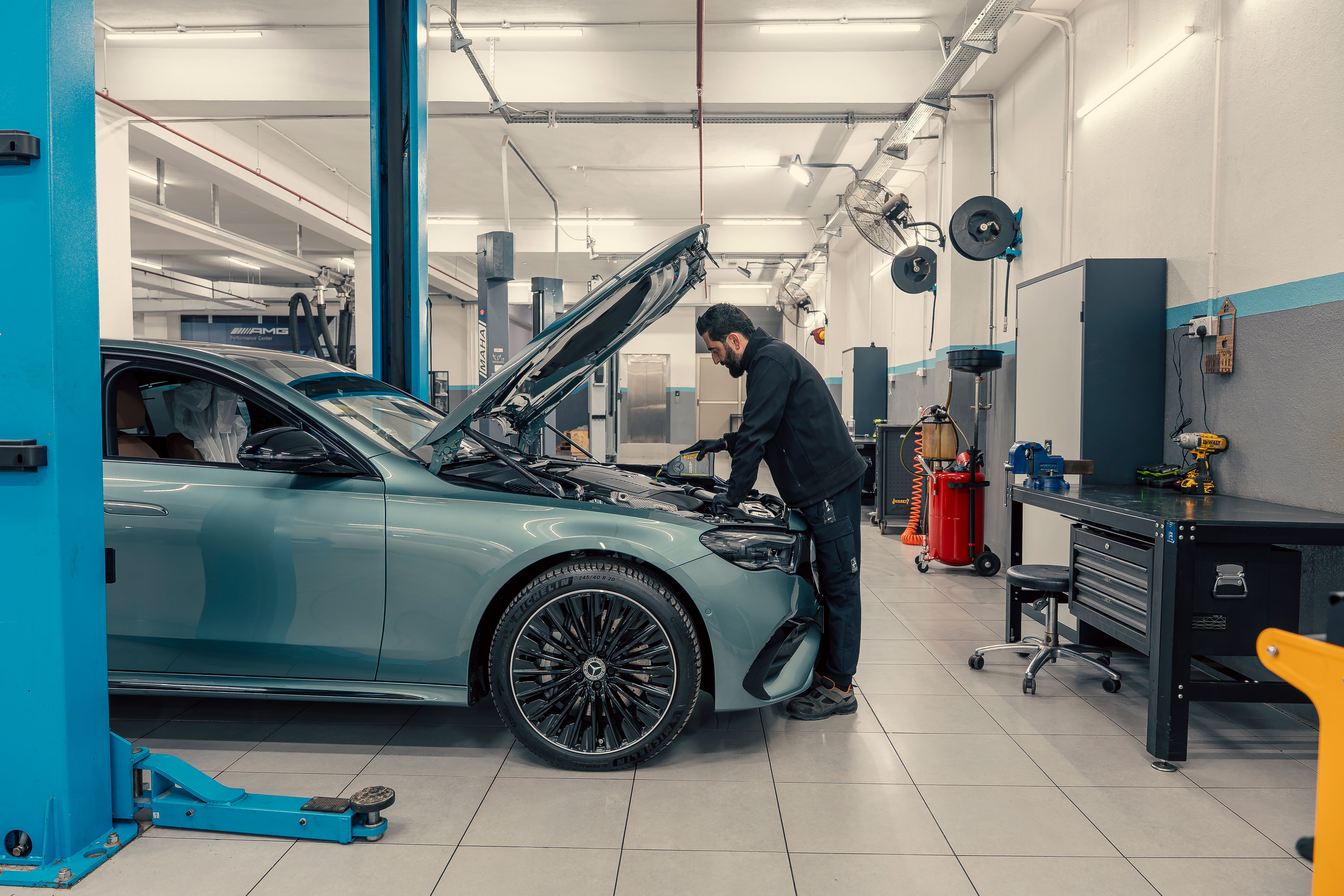
Proper water pump service protects the whole cooling system:
- Confirming the diagnosis — verifying the pump is the actual source of the problem.
- Inspecting related components — checking hoses, the thermostat, and coolant condition.
- Replacing with quality parts — often alongside the timing belt when they share access.
- Testing the system — confirming proper operation through complete cooling system service.
Why the Timing Belt and Water Pump Are Often Replaced Together
On many vehicles, the water pump and timing belt are closely connected, and servicing them together makes practical sense:
- Shared access —on many engines, reaching one requires removing the other.
- Similar lifespans —the two components often wear out around the same mileage.
- Labor savings —replacing both at once avoids paying twice for the same access work.
- Preventive value —doing both together prevents a second failure shortly after the first repair.
How Coolant Condition Affects Your Water Pump
The condition of your coolant has a direct impact on how long your water pump lasts and how well it performs:
- Fresh coolant protects —proper coolant prevents the corrosion that damages the pump.
- Old coolant corrodes —degraded coolant becomes acidic and attacks internal components.
- Contamination causes wear —debris in the coolant accelerates bearing and seal failure.
- Regular flushes help —keeping coolant fresh extends the life of the entire cooling system.
Frequently Asked Questions
Q: What are the first signs of a failing water pump?
A: Early warning signs include coolant leaks near the front-center of the vehicle, a whining or grinding noise from the front of the engine, rising engine temperature, and coolant loss without an obvious external leak. Catching these early can save the engine from serious overheating damage.
Q: How long does a water pump usually last?
A: Water pump lifespan varies, but many last well over 60,000 miles, and on many vehicles they’re replaced alongside the timing belt. Age, mileage, and coolant condition all affect longevity. Since failure can lead to rapid overheating, it’s worth watching for warning signs as the vehicle accumulates miles.
Q: What happens if a water pump fails completely?
A: Complete failure stops coolant circulation, and the engine can overheat within minutes. Sustained overheating risks a blown head gasket, a cracked block, or catastrophic engine damage — repairs that far exceed the cost of the pump itself. That’s why prompt replacement at the first warning signs is so important.
How to Protect Your Cooling System Long-Term
The water pump is one part of a cooling system that lasts longest when the whole system is cared for consistently:
- Regular coolant flushes —fresh coolant prevents the corrosion that damages the pump.
- Hose and belt checks —worn hoses and belts can affect the pump and circulation.
- Thermostat monitoring —a stuck thermostat stresses the cooling system.
- Prompt attention to leaks —addressing small leaks early prevents bigger cooling failures.
- Steady engine temperature —a healthy cooling system keeps the engine in its ideal operating range.
- Longer engine life —preventing overheating is one of the best things you can do for engine longevity.
- Fewer surprises —consistent cooling system care means far fewer unexpected breakdowns.
Protect Your Engine From Overheating
A failing water pump is a race against time — catch it early, and you save your engine. If you’ve noticed coolant leaks, overheating, or unusual noises, give us a call at 708-687-9955. At Vehicle Masters, we’ve served Oak Forest and the South Suburbs for over 30 years, and our team diagnoses cooling system problems accurately before recommending any radiator repair. Quality service, competitive pricing, customer satisfaction — we’re highly recommended.